
临
临 (lín) · to draw near
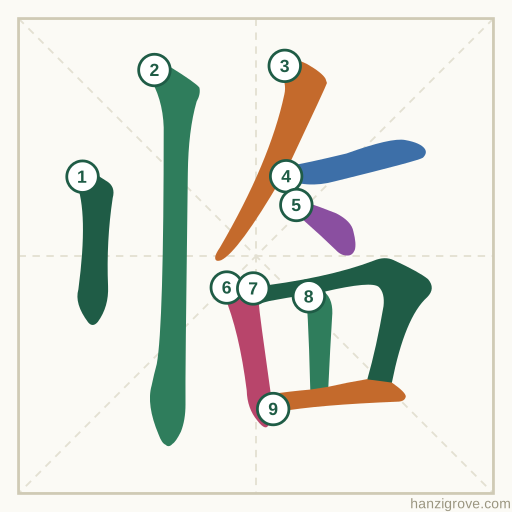
临 (lín) means “to draw near”. It is made of 丨 and has 9 strokes.
Break 临 into its parts
What 临 is made of
- 丨 — vertical stroke
临 stroke order
Example sentences with 光临
欢迎光临!Huānyíng guānglín!Welcome!
谢谢您光临我们的小店。Xièxie nín guānglín wǒmen de xiǎodiàn.Thank you for visiting our little shop.
Words with 临
- 光临guānglín(polite) to visit
- 临时línshítemporary
- 面临miànlínto face
- 濒临bīnlínto be on the verge of
- 降临jiànglínto arrive
- 临床línchuángclinical
Also built with ⿰
- 丽lìbeautiful
- 众zhòngmultitude
- 先xiānfirst
- 册cèvolume
- 勿wùdo not (formal, on signs)
- 压yāto press
- 厨chúkitchen
- 品pǐnarticle
- 哭kūto cry
- 器qìdevice
- 坚jiānhard
- 夜yènight
Quick facts
| Pinyin | lín |
|---|---|
| Meaning | to draw near |
| Strokes | 9 |
| Radical | 丨 (vertical line, #2) |
| Pattern | Left–right |
Questions about 临
What does 临 mean?
临 (lín) means “to draw near”.
How many strokes does 临 have?
临 has 9 strokes.
What is the radical of 临?
The radical of 临 is 丨 (gǔn, “vertical line”), Kangxi radical number 2.
What parts make up 临?
临 is made of 丨 (vertical stroke).
Keep learning
Start with HSK 1 · Group 1: 10 words with quick checks and spaced repeats.