
代
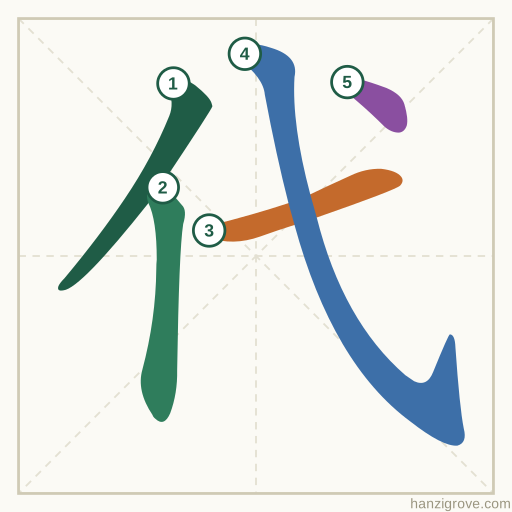
代 (dài) means “on behalf of”. It is made of 亻 + 弋 and has 5 strokes, and is an HSK 3 word in the 2021 standard.
Break 代 into its parts
What 代 is made of
- 亻 rén — person
- 弋 yì — to catch
Origin hint: A man 亻 caught 弋 by the passing of time (from the Make Me a Hanzi dataset; treat as a memory aid where history is uncertain)
代 stroke order
Example sentences
请代我向你父母问好。Qǐng dài wǒ xiàng nǐ fùmǔ wènhǎo.Please say hello to your parents for me.
王老师病了,今天李老师代课。Wáng lǎoshī bìng le, jīntiān Lǐ lǎoshī dàikè.Teacher Wang is sick, so Teacher Li is teaching in his place today.
Words with 代
- 代表dàibiǎorepresentative
- 代表团dàibiǎotuándelegation
- 古代gǔdàiancient times
- 年代niándàidecade (the 80s etc.)
- 时代shídàiage
- 现代xiàndàimodern
- 代替dàitìto replace
- 近代jìndàimodern times
- 替代tìdàito replace
- 朝代cháodàidynasty
- 代价dàijiàprice
- 代理dàilǐto act on behalf of
- 当代dāngdàicontemporary
- 后代hòudàilater generations
- 交代jiāodàito explain
- 历代lìdàisuccessive dynasties
- 世代shìdàifor generations
- 新陈代谢xīnchéndàixièmetabolism
Also built with 亻
- 亿yìhundred million
- 什shénwhat? mixed
- 仁rénbenevolent
- 仅jǐnonly
- 仇chóuenemy
- 仍réngstill
- 仔zǐsmall thing
- 他tāhe
- 仗zhàng1to rely upon
- 付fùto pay
- 仙xiāngod
- 仪yíinstrument
Quick facts
| Pinyin | dài |
|---|---|
| Meaning | on behalf of; to take the place of; generation |
| Strokes | 5 |
| Radical | 人 (person, #9) |
| Pattern | Left–right |
| HSK | HSK 3 (2021) |
Questions about 代
What does 代 mean?
代 (dài) means “on behalf of; to take the place of; generation”.
How many strokes does 代 have?
代 has 5 strokes.
What is the radical of 代?
The radical of 代 is 人 (rén, “person”), Kangxi radical number 9.
What parts make up 代?
代 is made of 亻 (person) and 弋 (to catch).
Which HSK level is 代?
代 is in HSK 3 (2021).
Learn 代 with its group
It is part of HSK 3 (2021) · Group 33: a short group with quick checks and spaced repeats.