
典
典 (diǎn) · law
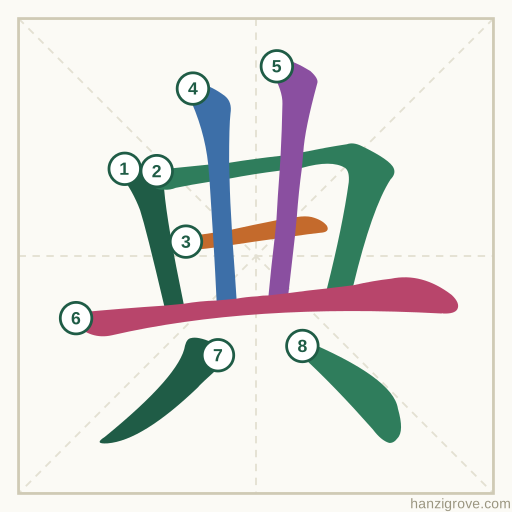
典 (diǎn) means “law”. It is made of 曲 + 八 and has 8 strokes.
Break 典 into its parts
What 典 is made of
- 曲 qū — crooked
- 曰 yuē — to speak
- 口 kǒu — mouth
- 一 — horizontal stroke
- 丨 — vertical stroke
- 丨 — vertical stroke
- 曰 yuē — to speak
- 八 bā — eight
Origin hint: Two hands 八 holding a book 冊 (from the Make Me a Hanzi dataset; treat as a memory aid where history is uncertain)
典 stroke order
Example sentences with 词典
我买了一本词典。Wǒ mǎi le yī běn cídiǎn.I bought a dictionary.
我能用一下你的词典吗?Wǒ néng yòng yīxià nǐ de cídiǎn ma?May I use your dictionary?
Words with 典
- 词典cídiǎndictionary
- 字典zìdiǎndictionary
- 典型diǎnxíngtypical
- 经典jīngdiǎnclassic
- 古典gǔdiǎnclassical
- 典礼diǎnlǐceremony
Quick facts
| Pinyin | diǎn |
|---|---|
| Meaning | law |
| Strokes | 8 |
| Radical | 八 (eight, #12) |
| Pattern | Top–bottom |
Questions about 典
What does 典 mean?
典 (diǎn) means “law”.
How many strokes does 典 have?
典 has 8 strokes.
What is the radical of 典?
The radical of 典 is 八 (bā, “eight”), Kangxi radical number 12.
What parts make up 典?
典 is made of 曲 (crooked) and 八 (eight).
Keep learning
Start with HSK 1 · Group 1: 10 words with quick checks and spaced repeats.