
冬
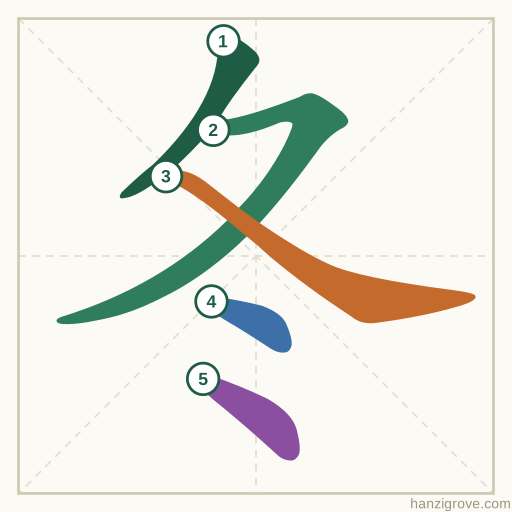
冬 (dōng) means “winter”. It is made of 夂 + ⺀ and has 5 strokes, and is an old HSK 3 word (HSK 2.0).
Break 冬 into its parts
What 冬 is made of
- 夂 zhǐ — to go
- 丿 — falling stroke
- 又 yòu — (once) again
- ⺀ — ice
Origin hint: A man walking 夂 on ice ⺀ (from the Make Me a Hanzi dataset; treat as a memory aid where history is uncertain)
冬 stroke order
Example sentences
冬天这里很冷。Dōngtiān zhèlǐ hěn lěng.It's very cold here in winter.
你喜欢冬天吗?Nǐ xǐhuan dōngtiān ma?Do you like winter?
Words with 冬
Also built with 夂
- 务wùaffairs
- 各gèeach
- 处chùplace
- 备bèito prepare
- 夏xiàsummer
- 惫bèitired
- 条tiáomeasure word for long thin things
- 麦màiwheat
Quick facts
| Pinyin | dōng |
|---|---|
| Meaning | winter |
| Strokes | 5 |
| Radical | 冫 (ice, #15) |
| Pattern | Top–bottom |
| HSK | Old HSK 3 |
Questions about 冬
What does 冬 mean?
冬 (dōng) means “winter”.
How many strokes does 冬 have?
冬 has 5 strokes.
What is the radical of 冬?
The radical of 冬 is 冫 (bīng, “ice”), Kangxi radical number 15.
What parts make up 冬?
冬 is made of 夂 (to go) and ⺀ (ice).
Which HSK level is 冬?
冬 is in Old HSK 3.
Learn 冬 with its group
It is part of Old HSK 3 · Group 6: a short group with quick checks and spaced repeats.