
出
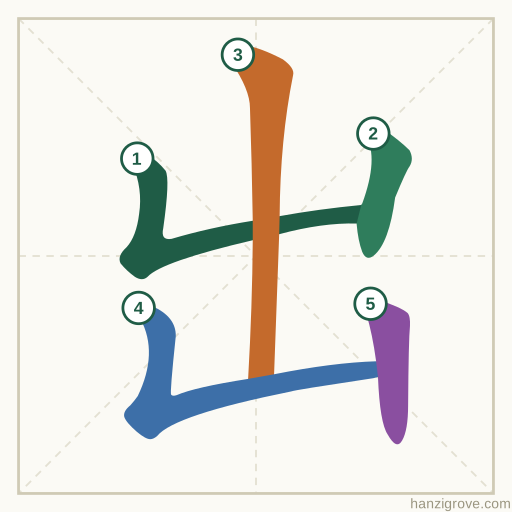
出 (chū) means “to go out”. It is made of 屮 + 凵 and has 5 strokes, and is an HSK 2 word in the current exam syllabus (2025).
Break 出 into its parts
What 出 is made of
- 屮 chè — sprout
- 凵 qiǎn — container
- 丨 — vertical stroke
- 凵 qiǎn — container
Origin hint: A sprout 屮 growing out of a container 凵 (from the Make Me a Hanzi dataset; treat as a memory aid where history is uncertain)
出 stroke order
Example sentences
他出门了。Tā chūmén le.He has gone out.
你几点出门?Nǐ jǐ diǎn chūmén?What time are you going out?
Words with 出
- 出来chūláito come out
- 出去chūqùto go out
- 出发chūfāto set off
- 出国chūguóto go abroad
- 出口chūkǒuexit
- 出门chūménto go out
- 出生chūshēngto be born
- 出现chūxiànto appear
- 出院chūyuànto leave hospital
- 出租chūzūto rent out
- 出租车chūzūchētaxi
- 得出déchūto reach (a result)
- 拿出náchūto take out
- 提出tíchūto put forward
- 找出zhǎochūto find out
- 播出bōchūto broadcast
- 发出fāchūto send out
- 认出rènchūto recognize
- 突出tūchūoutstanding
- 退出tuìchūto quit
- 演出yǎnchūperformance
- 指出zhǐchūto point out
- 出色chūsèoutstanding
- 出售chūshòuto sell
- 出席chūxíto attend
- 付出fùchūto put in (effort, time)
- 作出zuòchūto make (a decision etc.)
- 出差chūchāito go on a business trip
- 出版chūbǎnto publish
- 出示chūshìto show
- 层出不穷céngchūbùqióngto emerge one after another
- 出路chūlùway out
- 出卖chūmàito sell
- 出身chūshēnfamily background
- 出神chūshénlost in thought
- 出息chūxipromise
- 杰出jiéchūoutstanding
- 支出zhīchūexpenditure
- 出行chūxíngto travel
- 推出tuīchūto launch
- 外出wàichūto go out
Quick facts
| Pinyin | chū |
|---|---|
| Meaning | to go out; to come out |
| Strokes | 5 |
| Radical | 凵 (open box, #17) |
| Pattern | Top–bottom |
| HSK | HSK 2 (exam 2025) · HSK 1 (2021) · Old HSK 2 |
Questions about 出
What does 出 mean?
出 (chū) means “to go out; to come out”.
How many strokes does 出 have?
出 has 5 strokes.
What is the radical of 出?
The radical of 出 is 凵 (qiǎn, “open box”), Kangxi radical number 17.
What parts make up 出?
出 is made of 屮 (sprout) and 凵 (container).
Which HSK level is 出?
出 is in HSK 2 (exam 2025) and HSK 1 (2021) and Old HSK 2.
Learn 出 with its group
It is part of HSK 1 (2021) · Group 5: a short group with quick checks and spaced repeats.