
判
判 (pàn) · to judge
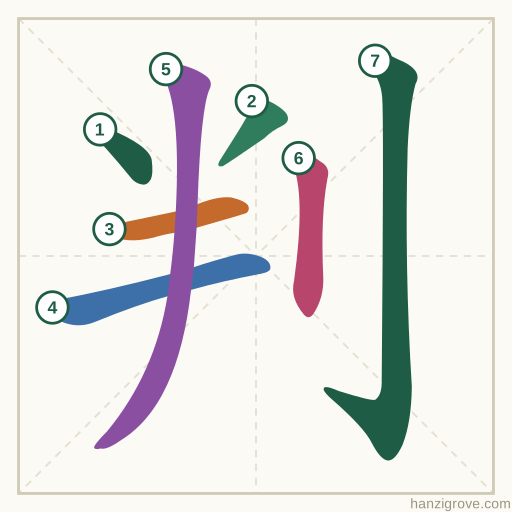
判 (pàn) means “to judge”. It is made of 半 + 刂 and has 7 strokes.
Break 判 into its parts
What 判 is made of
- 半 bàn — half
- 丷 ha — kwukyel
- 丶 — dot
- 牛 niú — ox
- 丷 ha — kwukyel
- 刂 dāo — knife
- 丨 — vertical stroke
- 亅 — hook
Origin hint: 刂 gives the meaning, 半 gives the sound. (from the Make Me a Hanzi dataset; treat as a memory aid where history is uncertain)
判 stroke order
Example sentences with 判断
我判断他今天不会来。Wǒ pànduàn tā jīntiān bù huì lái.I judge that he won't come today.
你的判断是对的。Nǐ de pànduàn shì duì de.Your judgment is right.
Words with 判
- 判断pànduànto judge
- 谈判tánpànto negotiate
- 裁判cáipànreferee
- 判决pànjuécourt judgment
- 批判pīpànto criticize
- 审判shěnpàntrial
Also built with 半
Quick facts
| Pinyin | pàn |
|---|---|
| Meaning | to judge |
| Strokes | 7 |
| Radical | 刀 (knife, #18) |
| Pattern | Left–right |
Questions about 判
What does 判 mean?
判 (pàn) means “to judge”.
How many strokes does 判 have?
判 has 7 strokes.
What is the radical of 判?
The radical of 判 is 刀 (dāo, “knife”), Kangxi radical number 18.
What parts make up 判?
判 is made of 半 (half) and 刂 (knife).
Keep learning
Start with HSK 1 · Group 1: 10 words with quick checks and spaced repeats.