
剩
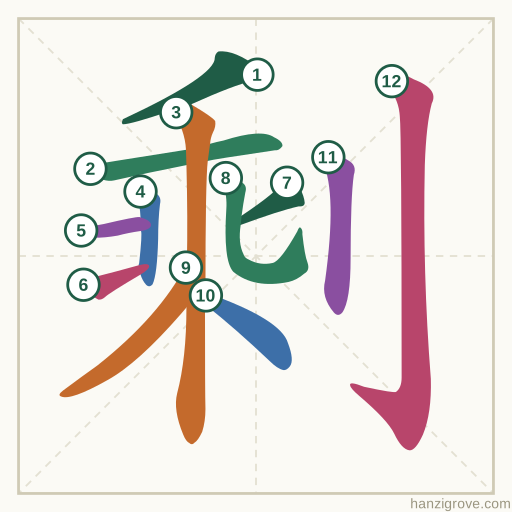
剩 (shèng) means “to be left over”. It is made of 乘 + 刂 and has 12 strokes, and is an HSK 4 word in the current exam syllabus (2025).
Break 剩 into its parts
What 剩 is made of
- 乘 chéng — ride
- 禾 hé — cereal
- 丿 — falling stroke
- 木 mù — tree
- 北 běi — north
- 匕 bǐ — spoon
- 禾 hé — cereal
- 刂 dāo — knife
- 丨 — vertical stroke
- 亅 — hook
剩 stroke order
Example sentences
我只剩十块钱了。Wǒ zhǐ shèng shí kuài qián le.I only have ten yuan left.
桌上还剩多少菜?Zhuō shang hái shèng duōshao cài?How much food is left on the table?
Quick facts
| Pinyin | shèng |
|---|---|
| Meaning | to be left over; to remain |
| Strokes | 12 |
| Pattern | Left–right |
| HSK | HSK 4 (exam 2025) · Old HSK 4 |
Questions about 剩
What does 剩 mean?
剩 (shèng) means “to be left over; to remain”.
How many strokes does 剩 have?
剩 has 12 strokes.
What parts make up 剩?
剩 is made of 乘 (ride) and 刂 (knife).
Which HSK level is 剩?
剩 is in HSK 4 (exam 2025) and Old HSK 4.
Learn 剩 with its group
It is part of Old HSK 4 · Group 38: a short group with quick checks and spaced repeats.