
割
割 (gē) means “to cut”. It is made of 害 + 刂 and has 12 strokes, and is an old HSK 6 word (HSK 2.0).
Break 割 into its parts
What 割 is made of
- 害 hài — to injure
- 宀 — roof
- 丶 — dot
- 冖 mì — cover
- 丰 fēng — abundant
- 三 sān — three
- 丨 — vertical stroke
- 口 kǒu — mouth
- 冂 — frame
- 一 — horizontal stroke
- 宀 — roof
- 刂 dāo — knife
- 丨 — vertical stroke
- 亅 — hook
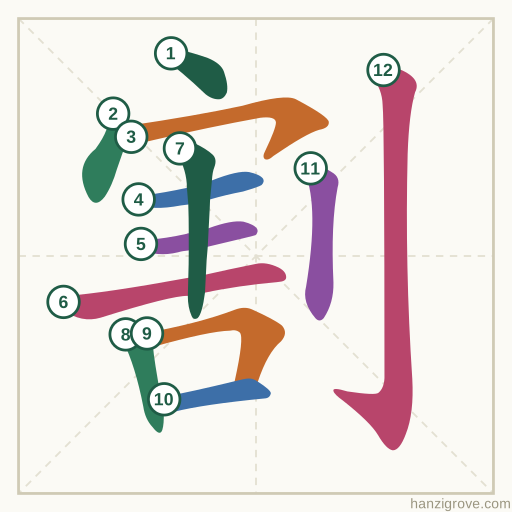
割 stroke order
Example sentences
农民正在地里割麦子。Nóngmín zhèngzài dìlǐ gē màizi.The farmers are cutting wheat in the field.
小心,别被纸割破手。Xiǎoxīn, bié bèi zhǐ gēpò shǒu.Careful, don't cut your hand on the paper.
Also built with 害
Quick facts
| Pinyin | gē |
|---|---|
| Meaning | to cut |
| Strokes | 12 |
| Pattern | Left–right |
| HSK | Old HSK 6 |
Questions about 割
What does 割 mean?
割 (gē) means “to cut”.
How many strokes does 割 have?
割 has 12 strokes.
What parts make up 割?
割 is made of 害 (to injure) and 刂 (knife).
Which HSK level is 割?
割 is in Old HSK 6.
Learn 割 with its group
It is part of Old HSK 6 · Group 64: a short group with quick checks and spaced repeats.