
却
却 (què) means “but”. It is made of 去 + 卩 and has 7 strokes, and is an HSK 4 word in the current exam syllabus (2025).
Break 却 into its parts
What 却 is made of
- 去 qù — to go away
- 土 tǔ — earth
- 十 — ten
- 一 — horizontal stroke
- 厶 sī — private
- 土 tǔ — earth
- 卩 jié — seal
- 丨 — vertical stroke
Origin hint: 卩 gives the meaning, 去 gives the sound. (from the Make Me a Hanzi dataset; treat as a memory aid where history is uncertain)
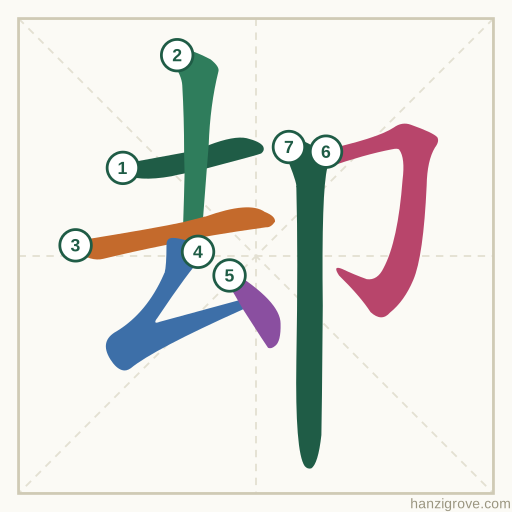
却 stroke order
Example sentences
他很累,却不想休息。Tā hěn lèi, què bù xiǎng xiūxi.He is very tired, but he doesn't want to rest.
天气很冷,他却只穿了一件衬衫。Tiānqì hěn lěng, tā què zhǐ chuān le yī jiàn chènshān.It's very cold, yet he's only wearing a shirt.
Words with 却
Also built with 去
Quick facts
| Pinyin | què |
|---|---|
| Meaning | but; yet; however |
| Strokes | 7 |
| Radical | 卩 (seal, #26) |
| Pattern | Left–right |
| HSK | HSK 4 (exam 2025) · HSK 4 (2021) · Old HSK 4 |
Questions about 却
What does 却 mean?
却 (què) means “but; yet; however”.
How many strokes does 却 have?
却 has 7 strokes.
What is the radical of 却?
The radical of 却 is 卩 (jié, “seal”), Kangxi radical number 26.
What parts make up 却?
却 is made of 去 (to go away) and 卩 (seal).
Which HSK level is 却?
却 is in HSK 4 (exam 2025) and HSK 4 (2021) and Old HSK 4.
Learn 却 with its group
It is part of HSK 4 (2021) · Group 95: a short group with quick checks and spaced repeats.