
古
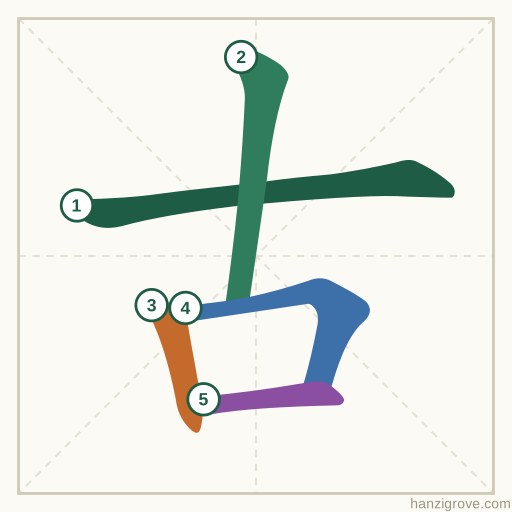
古 (gǔ) means “ancient”. It is made of 十 + 口 and has 5 strokes, and is an HSK 3 word in the 2021 standard.
Break 古 into its parts
What 古 is made of
- 十 — ten
- 一 — horizontal stroke
- 丨 — vertical stroke
- 口 kǒu — mouth
- 冂 — frame
- 丨 — vertical stroke
- 一 — horizontal stroke
- 冂 — frame
Origin hint: Words passing through ten 十 mouths 口 (from the Make Me a Hanzi dataset; treat as a memory aid where history is uncertain)
古 stroke order
Example sentences
这是一座古城。Zhè shì yī zuò gǔ chéng.This is an ancient city.
这个村很古老。Zhège cūn hěn gǔlǎo.This village is very old.
Words with 古
- 古代gǔdàiancient times
- 古典gǔdiǎnclassical
- 名胜古迹míngshènggǔjìplaces of interest
- 古董gǔdǒngantique
- 古怪gǔguàistrange
- 考古kǎogǔarchaeology
Also built with 十
- 什shénwhat? mixed
- 克kègram
- 千qiānthousand
- 升shēngto rise
- 华huáflowery
- 协xiéto assist
- 卑bēihumble
- 卖màito sell
- 南nánsouth
- 博bóto gamble
- 叶yèleaf
- 土tǔsoil
Quick facts
| Pinyin | gǔ |
|---|---|
| Meaning | ancient; old |
| Strokes | 5 |
| Radical | 口 (mouth, #30) |
| Pattern | Top–bottom |
| HSK | HSK 3 (2021) |
Questions about 古
What does 古 mean?
古 (gǔ) means “ancient; old”.
How many strokes does 古 have?
古 has 5 strokes.
What is the radical of 古?
The radical of 古 is 口 (kǒu, “mouth”), Kangxi radical number 30.
What parts make up 古?
古 is made of 十 (ten) and 口 (mouth).
Which HSK level is 古?
古 is in HSK 3 (2021).
Learn 古 with its group
It is part of HSK 3 (2021) · Group 60: a short group with quick checks and spaced repeats.