
同
同 (tóng) · same
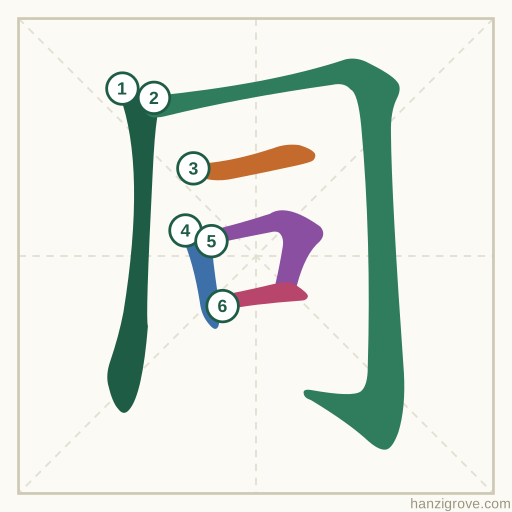
同 (tóng) means “same”. It is made of 凡 + 口 and has 6 strokes.
Break 同 into its parts
What 同 is made of
- 凡 fán — any
- 几 jǐ — how many
- 丿 — falling stroke
- 乙 yǐ — second
- 丶 — dot
- 几 jǐ — how many
- 口 kǒu — mouth
- 冂 — frame
- 丨 — vertical stroke
- 一 — horizontal stroke
- 冂 — frame
Origin hint: Sharing a common 凡 tongue 口 (from the Make Me a Hanzi dataset; treat as a memory aid where history is uncertain)
同 stroke order
Example sentences with 同学
我和同学一起去吃饭。Wǒ hé tóngxué yīqǐ qù chīfàn.I'm going to eat with my classmates.
你的同学叫什么名字?Nǐ de tóngxué jiào shénme míngzi?What is your classmate's name?
Words with 同
- 同学tóngxuéclassmate
- 不同bùtóngdifferent
- 同时tóngshíat the same time
- 同事tóngshìcolleague
- 同样tóngyàngsame
- 相同xiāngtóngidentical
- 共同gòngtóngcommon
- 同意tóngyìto agree
- 合同hétongcontract
- 同情tóngqíngto sympathize
- 胡同hútòngalley
- 连同liántóngtogether with
- 同胞tóngbāofellow countryman
- 同志tóngzhìcomrade
Also built with 凡
Quick facts
| Pinyin | tóng |
|---|---|
| Meaning | same |
| Strokes | 6 |
| Radical | 口 (mouth, #30) |
| Pattern | Open at the bottom |
Questions about 同
What does 同 mean?
同 (tóng) means “same”.
How many strokes does 同 have?
同 has 6 strokes.
What is the radical of 同?
The radical of 同 is 口 (kǒu, “mouth”), Kangxi radical number 30.
What parts make up 同?
同 is made of 凡 (any) and 口 (mouth).
Keep learning
Start with HSK 1 · Group 1: 10 words with quick checks and spaced repeats.