
含
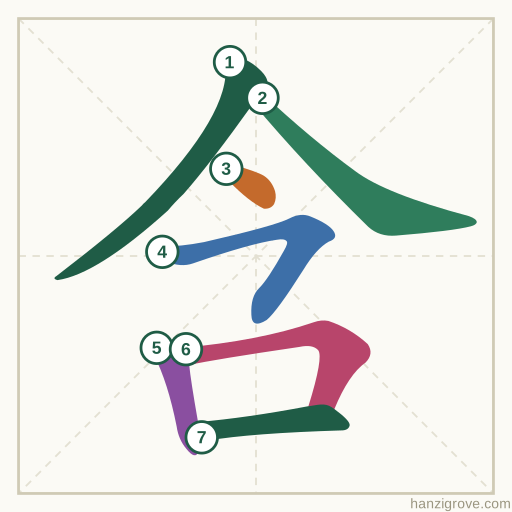
含 (hán) means “to contain”. It is made of 今 + 口 and has 7 strokes, and is an HSK 4 word in the 2021 standard.
Break 含 into its parts
What 含 is made of
- 今 jīn — modern
- 人 rén — person
- 口 kǒu — mouth
- 冂 — frame
- 丨 — vertical stroke
- 一 — horizontal stroke
- 冂 — frame
Origin hint: 口 gives the meaning, 今 gives the sound. (from the Make Me a Hanzi dataset; treat as a memory aid where history is uncertain)
含 stroke order
Example sentences
把药含在嘴里,别吃下去。Bǎ yào hán zài zuǐ lǐ, bié chī xiàqù.Keep the medicine in your mouth; don't swallow it.
这种水果含很多糖。Zhè zhǒng shuǐguǒ hán hěn duō táng.This kind of fruit contains a lot of sugar.
Words with 含
Also built with 今
Quick facts
| Pinyin | hán |
|---|---|
| Meaning | to contain; to hold in the mouth |
| Strokes | 7 |
| Radical | 口 (mouth, #30) |
| Pattern | Top–bottom |
| HSK | HSK 4 (2021) |
Questions about 含
What does 含 mean?
含 (hán) means “to contain; to hold in the mouth”.
How many strokes does 含 have?
含 has 7 strokes.
What is the radical of 含?
The radical of 含 is 口 (kǒu, “mouth”), Kangxi radical number 30.
What parts make up 含?
含 is made of 今 (modern) and 口 (mouth).
Which HSK level is 含?
含 is in HSK 4 (2021).
Learn 含 with its group
It is part of HSK 4 (2021) · Group 4: a short group with quick checks and spaced repeats.