
困
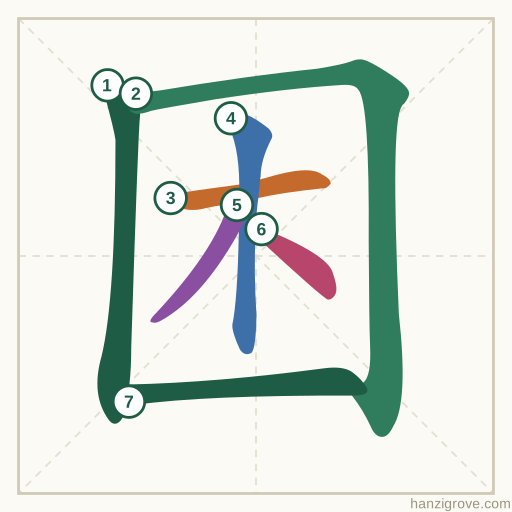
困 (kùn) means “sleepy”. It is made of 囗 + 木 and has 7 strokes, and is an HSK 4 word in the current exam syllabus (2025).
Break 困 into its parts
What 困 is made of
- 囗 wéi — enclosure
- 冂 — frame
- 丨 — vertical stroke
- 一 — horizontal stroke
- 冂 — frame
- 木 mù — tree
- 十 — ten
- 一 — horizontal stroke
- 丨 — vertical stroke
- 八 bā — eight
- 十 — ten
Origin hint: A fence 囗 built around a tree 木 (from the Make Me a Hanzi dataset; treat as a memory aid where history is uncertain)
困 stroke order
Example sentences
我昨天睡得太晚,现在很困。Wǒ zuótiān shuì de tài wǎn, xiànzài hěn kùn.I went to bed too late last night, so I'm very sleepy now.
他被困在电梯里了。Tā bèi kùn zài diàntī li le.He got stuck in the elevator.
Words with 困
Also built with 囗
- 四sìfour
- 回huíto return
- 因yīncause
- 团tuángroup
- 园yuángarden
- 围wéito surround
- 固gùto solidify
- 国guócountry
- 图túpicture
- 圆yuánround
- 圈quāncircle
- 西xīwest
Quick facts
| Pinyin | kùn |
|---|---|
| Meaning | sleepy; to be stuck; to trap |
| Strokes | 7 |
| Radical | 囗 (enclosure, #31) |
| Pattern | Full enclosure |
| HSK | HSK 4 (exam 2025) · HSK 3 (2021) · Old HSK 4 |
Questions about 困
What does 困 mean?
困 (kùn) means “sleepy; to be stuck; to trap”.
How many strokes does 困 have?
困 has 7 strokes.
What is the radical of 困?
The radical of 困 is 囗 (wéi, “enclosure”), Kangxi radical number 31.
What parts make up 困?
困 is made of 囗 (enclosure) and 木 (tree).
Which HSK level is 困?
困 is in HSK 4 (exam 2025) and HSK 3 (2021) and Old HSK 4.
Learn 困 with its group
It is part of HSK 3 (2021) · Group 34: a short group with quick checks and spaced repeats.