
堪
堪 (kān) · to endure
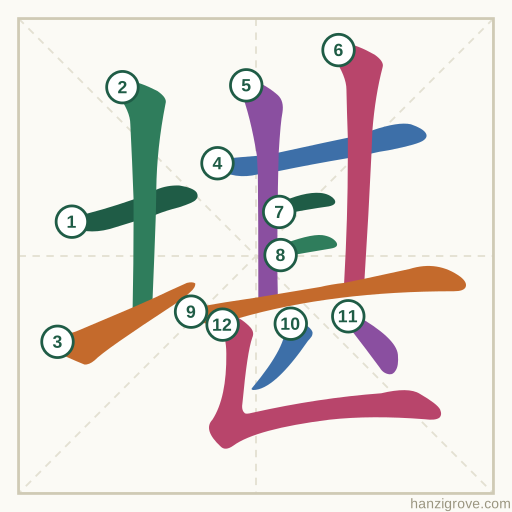
12 strokesLeft–right
堪 (kān) means “to endure”. It is made of 土 + 甚 and has 12 strokes.
Break 堪 into its parts
What 堪 is made of
- 土 tǔ — earth
- 十 — ten
- 一 — horizontal stroke
- 丨 — vertical stroke
- 一 — horizontal stroke
- 十 — ten
- 甚 shén — considerably
- 甘 gān — sweet
- 卄 niàn — twenty
- 二 — two strokes
- 匹 pǐ — bolt of cloth
- 匸 xì — box
- 儿 ér — child
- 甘 gān — sweet
堪 stroke order
Example sentences with 不堪
他累得疲惫不堪。Tā lèi de píbèi bùkān.He is utterly exhausted.
那个房间脏乱不堪。Nàge fángjiān zāng luàn bùkān.That room is terribly dirty and messy.
Words with 堪
Also built with 土
- 去qùto go
- 吐tǔto spit
- 圣shèngholy
- 在zàiat
- 地deadverb particle (-ly)
- 场chǎngplace
- 圾jīgarbage
- 址zhǐlocation
- 均jūnequal
- 坏huàibad
- 坐zuòto sit
- 坑kēngpit
Quick facts
| Pinyin | kān |
|---|---|
| Meaning | to endure |
| Strokes | 12 |
| Pattern | Left–right |
Questions about 堪
What does 堪 mean?
堪 (kān) means “to endure”.
How many strokes does 堪 have?
堪 has 12 strokes.
What parts make up 堪?
堪 is made of 土 (earth) and 甚 (considerably).
Keep learning
Start with HSK 1 · Group 1: 10 words with quick checks and spaced repeats.