
声
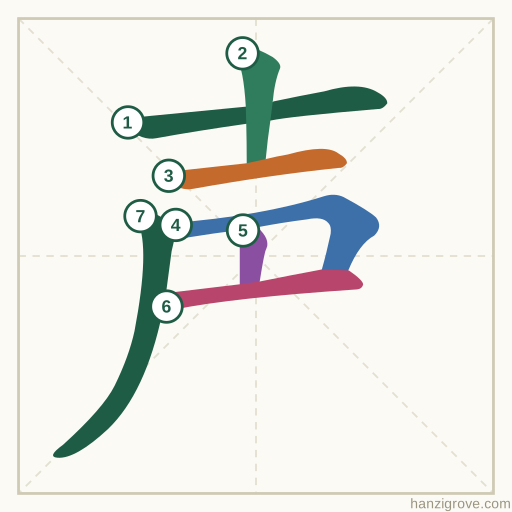
声 (shēng) means “sound, voice”. It is made of 士 and has 7 strokes, and is an HSK 3 word in the current exam syllabus (2025).
Break 声 into its parts
What 声 is made of
- 士 shì — scholar
Origin hint: Simplified form of 聲; see that character for the etymology (from the Make Me a Hanzi dataset; treat as a memory aid where history is uncertain)
声 stroke order
Example sentences
请你说话小声一点。Qǐng nǐ shuōhuà xiǎo shēng yìdiǎn.Please speak a little more quietly.
走以前跟我说一声。Zǒu yǐqián gēn wǒ shuō yì shēng.Let me know before you leave.
Words with 声
- 大声dàshēngloudly
- 声音shēngyīnsound
- 小声xiǎoshēngin a low voice
- 歌声gēshēngsinging
- 声明shēngmíngstatement
- 声调shēngdiàotone (of a syllable)
- 声势shēngshìmomentum
- 声誉shēngyùreputation
- 相声xiàngshengcrosstalk
- 鸦雀无声yāquèwúshēngtotal silence
Also built with 士
Quick facts
| Pinyin | shēng |
|---|---|
| Meaning | sound, voice; measure word for sounds |
| Strokes | 7 |
| Radical | 士 (scholar, #33) |
| Pattern | Top–bottom |
| HSK | HSK 3 (exam 2025) |
Questions about 声
What does 声 mean?
声 (shēng) means “sound, voice; measure word for sounds”.
How many strokes does 声 have?
声 has 7 strokes.
What is the radical of 声?
The radical of 声 is 士 (shì, “scholar”), Kangxi radical number 33.
What parts make up 声?
声 is made of 士 (scholar).
Which HSK level is 声?
声 is in HSK 3 (exam 2025).
Learn 声 with its group
It is part of HSK 3 · Group 33: a short group with quick checks and spaced repeats.