
奇
奇 (qí) · strange
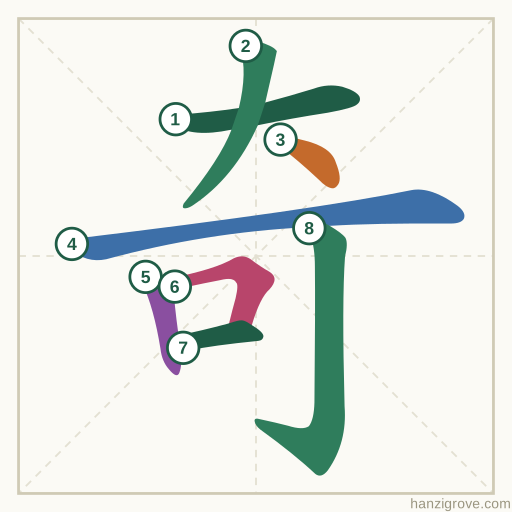
奇 (qí) means “strange”. It is made of 大 + 可 and has 8 strokes.
Break 奇 into its parts
What 奇 is made of
- 大 dà — big
- 一 — horizontal stroke
- 人 rén — person
- 可 kě — may
- 丁 dīng — male adult
- 口 kǒu — mouth
- 冂 — frame
- 一 — horizontal stroke
Origin hint: A person 大 riding a horse 可 (from the Make Me a Hanzi dataset; treat as a memory aid where history is uncertain)
奇 stroke order
Example sentences with 好奇
孩子们对什么都很好奇。Háizimen duì shénme dōu hěn hàoqí.Children are curious about everything.
你不好奇他是谁吗?Nǐ bù hàoqí tā shì shéi ma?Aren't you curious who he is?
Words with 奇
Also built with 大
- 因yīncause
- 天tiānday
- 太tàitoo
- 夫fūman
- 央yāngcentral
- 头tóuhead
- 夸kuāto praise
- 夺duóto rob
- 奈nàibut
- 奋fènto strive
- 奔bēnto rush about
- 奖jiǎngprize
Quick facts
| Pinyin | qí |
|---|---|
| Meaning | strange |
| Strokes | 8 |
| Radical | 大 (big, #37) |
| Pattern | Top–bottom |
Questions about 奇
What does 奇 mean?
奇 (qí) means “strange”.
How many strokes does 奇 have?
奇 has 8 strokes.
What is the radical of 奇?
The radical of 奇 is 大 (dà, “big”), Kangxi radical number 37.
What parts make up 奇?
奇 is made of 大 (big) and 可 (may).
Keep learning
Start with HSK 1 · Group 1: 10 words with quick checks and spaced repeats.