
宰
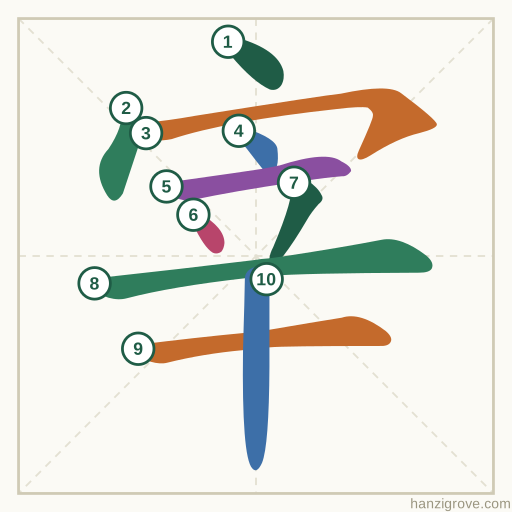
宰 (zǎi) means “to slaughter”. It is made of 宀 + 辛 and has 10 strokes, and is an old HSK 6 word (HSK 2.0).
Break 宰 into its parts
What 宰 is made of
- 宀 — roof
- 丶 — dot
- 冖 mì — cover
- 辛 xīn — bitter
- 立 lì — to stand
- 亠 tóu — lid
- 丷 ha — kwukyel
- 一 — horizontal stroke
- 十 — ten
- 一 — horizontal stroke
- 丨 — vertical stroke
- 立 lì — to stand
宰 stroke order
Example sentences
过年前,村里宰了一头猪。Guònián qián, cūnlǐ zǎi le yī tóu zhū.Before New Year, the village slaughtered a pig.
在景区买东西小心被宰。Zài jǐngqū mǎi dōngxi xiǎoxīn bèi zǎi.Be careful of being ripped off when shopping at tourist sites.
Also built with 宀
- 塞sāito stop up
- 字zìcharacter
- 宁níngcalm
- 它tāit
- 宅zháiresidence
- 宇yǔbuilding
- 守shǒuto guard
- 安ānsafe
- 完wánto finish
- 宏hónggreat
- 宗zōngancestry
- 官guānofficial
Quick facts
| Pinyin | zǎi |
|---|---|
| Meaning | to slaughter; to rip off (overcharge) |
| Strokes | 10 |
| Pattern | Top–bottom |
| HSK | Old HSK 6 |
Questions about 宰
What does 宰 mean?
宰 (zǎi) means “to slaughter; to rip off (overcharge)”.
How many strokes does 宰 have?
宰 has 10 strokes.
What parts make up 宰?
宰 is made of 宀 (roof) and 辛 (bitter).
Which HSK level is 宰?
宰 is in Old HSK 6.
Learn 宰 with its group
It is part of Old HSK 6 · Group 225: a short group with quick checks and spaced repeats.