
寄
寄 (jì) means “to send by mail”. It is made of 宀 + 奇 and has 11 strokes, and is an HSK 4 word in the current exam syllabus (2025).
Break 寄 into its parts
What 寄 is made of
- 宀 — roof
- 丶 — dot
- 冖 mì — cover
- 奇 qí — strange
- 大 dà — big
- 一 — horizontal stroke
- 人 rén — person
- 可 kě — may
- 丁 dīng — male adult
- 口 kǒu — mouth
- 大 dà — big
Origin hint: 宀 gives the meaning, 奇 gives the sound. (from the Make Me a Hanzi dataset; treat as a memory aid where history is uncertain)
寄 stroke order
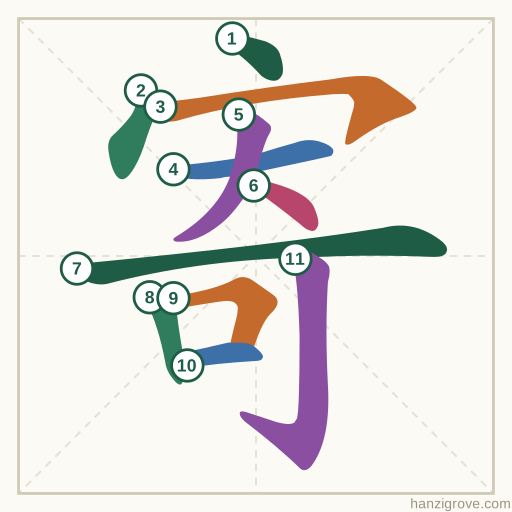
Example sentences
我给妈妈寄了一封信。Wǒ gěi māma jì le yī fēng xìn.I sent a letter to my mother.
这个包裹寄到上海要多少钱?Zhège bāoguǒ jì dào Shànghǎi yào duōshǎo qián?How much does it cost to send this parcel to Shanghai?
Words with 寄
Also built with 宀
- 塞sāito stop up
- 字zìcharacter
- 宁níngcalm
- 它tāit
- 宅zháiresidence
- 宇yǔbuilding
- 守shǒuto guard
- 安ānsafe
- 完wánto finish
- 宏hónggreat
- 宗zōngancestry
- 官guānofficial
Quick facts
| Pinyin | jì |
|---|---|
| Meaning | to send by mail; to post |
| Strokes | 11 |
| Radical | 宀 (roof, #40) |
| Pattern | Top–bottom |
| HSK | HSK 4 (exam 2025) · HSK 4 (2021) · Old HSK 4 |
Questions about 寄
What does 寄 mean?
寄 (jì) means “to send by mail; to post”.
How many strokes does 寄 have?
寄 has 11 strokes.
What is the radical of 寄?
The radical of 寄 is 宀 (mián, “roof”), Kangxi radical number 40.
What parts make up 寄?
寄 is made of 宀 (roof) and 奇 (strange).
Which HSK level is 寄?
寄 is in HSK 4 (exam 2025) and HSK 4 (2021) and Old HSK 4.
Learn 寄 with its group
It is part of HSK 4 (2021) · Group 70: a short group with quick checks and spaced repeats.