
居
居 (jū) · to live
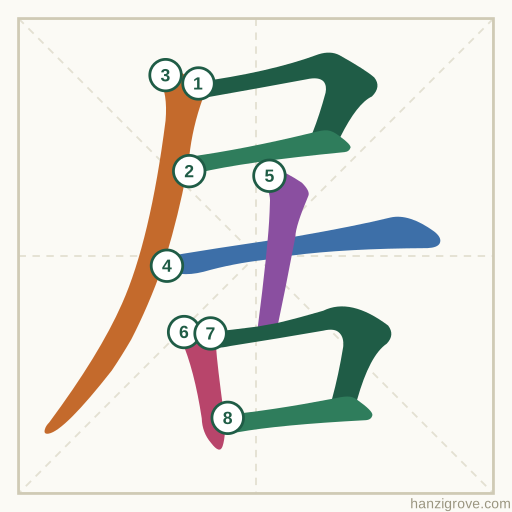
居 (jū) means “to live”. It is made of 户 + 古 and has 8 strokes.
Break 居 into its parts
What 居 is made of
- 户 hù — a household
- 古 gǔ — old
- 十 — ten
- 一 — horizontal stroke
- 丨 — vertical stroke
- 口 kǒu — mouth
- 冂 — frame
- 一 — horizontal stroke
- 十 — ten
Origin hint: 户 gives the meaning, 古 gives the sound. (from the Make Me a Hanzi dataset; treat as a memory aid where history is uncertain)
居 stroke order
Example sentences with 居民
这个小区有很多居民。Zhège xiǎoqū yǒu hěn duō jūmín.Many residents live in this neighborhood.
这里的居民很热情。Zhèlǐ de jūmín hěn rèqíng.The residents here are very friendly.
Words with 居
Also built with 户
- 启qǐto open
- 妒dùjealous
- 屏píngscreen
- 房fángbuilding
- 所suǒmeasure word for schools, houses
- 扁biǎnflat
- 扇shànfan
- 护hùto defend
- 炉lúfireplace
- 肩jiānshoulders
- 雇gùemployment
Quick facts
| Pinyin | jū |
|---|---|
| Meaning | to live |
| Strokes | 8 |
| Radical | 戶 (door, #63) |
| Pattern | Top-left wrap |
Questions about 居
What does 居 mean?
居 (jū) means “to live”.
How many strokes does 居 have?
居 has 8 strokes.
What is the radical of 居?
The radical of 居 is 戶 (hù, “door”), Kangxi radical number 63.
What parts make up 居?
居 is made of 户 (a household) and 古 (old).
Keep learning
Start with HSK 1 · Group 1: 10 words with quick checks and spaced repeats.