
幸
幸 (xìng) · favor
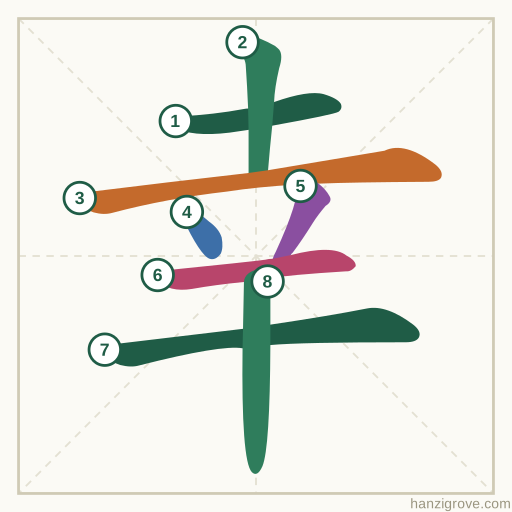
幸 (xìng) means “favor”. It is made of 土 + 丷 + 干 and has 8 strokes.
Break 幸 into its parts
What 幸 is made of
- 土 tǔ — earth
- 十 — ten
- 一 — horizontal stroke
- 丨 — vertical stroke
- 一 — horizontal stroke
- 十 — ten
- 丷 ha — kwukyel
- 丶 — dot
- 干 gàn — dry (gān)
- 一 — horizontal stroke
- 十 — ten
- 一 — horizontal stroke
- 丨 — vertical stroke
Origin hint: Two men, one alive 土 and one dead 干; the living one is lucky (from the Make Me a Hanzi dataset; treat as a memory aid where history is uncertain)
幸 stroke order
Example sentences with 幸福
他们一家人很幸福。Tāmen yī jiārén hěn xìngfú.Their family is very happy.
你觉得什么是幸福?Nǐ juéde shénme shì xìngfú?What do you think happiness is?
Words with 幸
Also built with 土
- 去qùto go
- 吐tǔto spit
- 圣shèngholy
- 在zàiat
- 地deadverb particle (-ly)
- 场chǎngplace
- 圾jīgarbage
- 址zhǐlocation
- 均jūnequal
- 坏huàibad
- 坐zuòto sit
- 坑kēngpit
Quick facts
| Pinyin | xìng |
|---|---|
| Meaning | favor |
| Strokes | 8 |
| Radical | 干 (dry, #51) |
| Pattern | Top–bottom |
Questions about 幸
What does 幸 mean?
幸 (xìng) means “favor”.
How many strokes does 幸 have?
幸 has 8 strokes.
What is the radical of 幸?
The radical of 幸 is 干 (gàn, “dry”), Kangxi radical number 51.
What parts make up 幸?
幸 is made of 土 (earth) and 丷 (kwukyel) and 干 (dry (gān)).
Keep learning
Start with HSK 1 · Group 1: 10 words with quick checks and spaced repeats.