
弹
弹 (tán) means “to play, piano, guitar”. It is made of 弓 + 单 and has 11 strokes, and is an HSK 4 word in the current exam syllabus (2025).
Break 弹 into its parts
What 弹 is made of
- 弓 gōng — bow
- 单 dān — single
- 丷 ha — kwukyel
- 丶 — dot
- 丷 ha — kwukyel
弹 stroke order
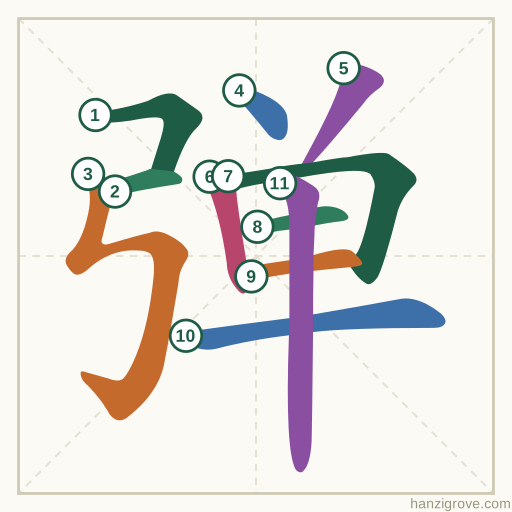
Example sentences
她会弹钢琴,弹得很好。Tā huì tán gāngqín, tán de hěn hǎo.She can play the piano, and she plays very well.
哥哥喜欢弹吉他。Gēge xǐhuan tán jítā.My older brother likes playing the guitar.
Words with 弹
Also built with 弓
- 引yǐnto lead
- 张zhāngmeasure word for flat things
- 弥mícomplete
- 弦xiánstring (of an instrument or bow)
- 弯wānto bend
- 强qiángstrong
- 粥zhōuporridge
- 躬gōngto bow
Quick facts
| Pinyin | tán |
|---|---|
| Meaning | to play, piano, guitar |
| Strokes | 11 |
| Pattern | Left–right |
| HSK | HSK 4 (exam 2025) |
Questions about 弹
What does 弹 mean?
弹 (tán) means “to play, piano, guitar”.
How many strokes does 弹 have?
弹 has 11 strokes.
What parts make up 弹?
弹 is made of 弓 (bow) and 单 (single).
Which HSK level is 弹?
弹 is in HSK 4 (exam 2025).
Learn 弹 with its group
It is part of HSK 4 · Group 72: a short group with quick checks and spaced repeats.