
愿
愿 (yuàn) · desire
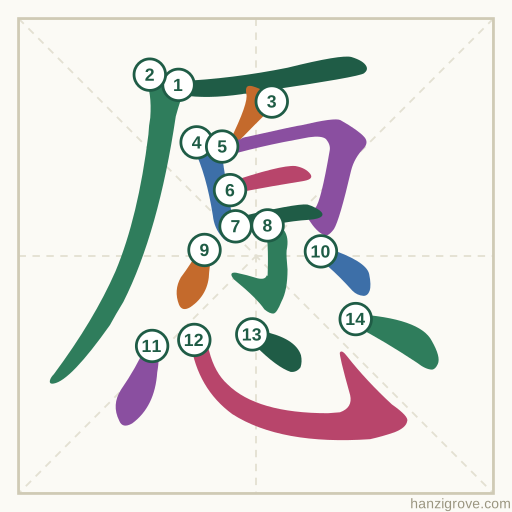
愿 (yuàn) means “desire”. It is made of 原 + 心 and has 14 strokes.
Break 愿 into its parts
What 愿 is made of
- 原 yuán — source
- 厂 chǎng — cliff
- 泉 quán — spring
- 心 xīn — heart
Origin hint: 心 gives the meaning, 原 gives the sound. (from the Make Me a Hanzi dataset; treat as a memory aid where history is uncertain)
愿 stroke order
Example sentences with 愿意
我愿意帮你。Wǒ yuànyì bāng nǐ.I'm willing to help you.
你愿意跟我去吗?Nǐ yuànyì gēn wǒ qù ma?Would you like to go with me?
Words with 愿
- 愿意yuànyìto be willing
- 愿望yuànwàngwish
- 志愿zhìyuànwish
- 志愿者zhìyuànzhěvolunteer
- 自愿zìyuànvoluntary
- 宁愿nìngyuànwould rather
- 心甘情愿xīngānqíngyuànwillingly
Also built with 原
Quick facts
| Pinyin | yuàn |
|---|---|
| Meaning | desire |
| Strokes | 14 |
| Radical | 心 (heart, #61) |
| Pattern | Top-left wrap |
Questions about 愿
What does 愿 mean?
愿 (yuàn) means “desire”.
How many strokes does 愿 have?
愿 has 14 strokes.
What is the radical of 愿?
The radical of 愿 is 心 (xīn, “heart”), Kangxi radical number 61.
What parts make up 愿?
愿 is made of 原 (source) and 心 (heart).
Keep learning
Start with HSK 1 · Group 1: 10 words with quick checks and spaced repeats.