
慢
慢 (màn) means “slow”. It is made of 忄 + 曼 and has 14 strokes, and is an HSK 2 word in the current exam syllabus (2025).
Break 慢 into its parts
What 慢 is made of
- 忄 xīn — heart
- 八 bā — eight
- 丨 — vertical stroke
- 曼 màn — long
- 日 rì — sun; day
- 口 kǒu — mouth
- 一 — horizontal stroke
- 罒 wǎng — net
- 口 kǒu — mouth
- 又 yòu — and
- 日 rì — sun; day
Origin hint: 忄 gives the meaning, 曼 gives the sound. (from the Make Me a Hanzi dataset; treat as a memory aid where history is uncertain)
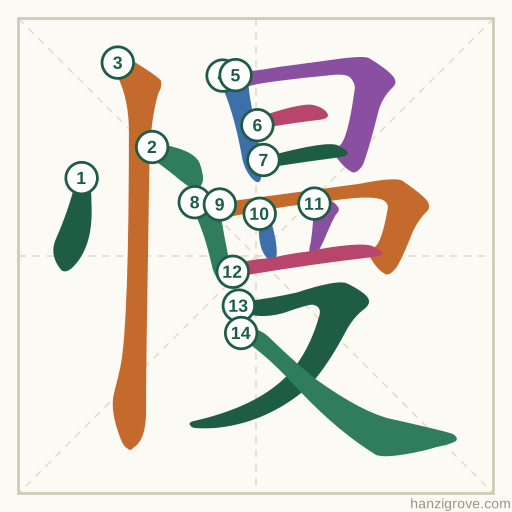
慢 stroke order
Example sentences
请说慢一点儿。Qǐng shuō màn yīdiǎnr.Please speak a bit more slowly.
他走得很慢。Tā zǒu de hěn màn.He walks very slowly.
Words with 慢
Also built with 忄
- 忆yìto remember
- 忙mángbusy
- 忧yōusad
- 快kuàifast
- 怀huáibosom
- 怕pàto be afraid of
- 怖bùfrightened
- 怜liánto pity
- 性xìng-ness (suffix for quality)
- 怪guàistrange
- 怯qièafraid
- 恍huǎngabsent-minded
Quick facts
| Pinyin | màn |
|---|---|
| Meaning | slow |
| Strokes | 14 |
| Radical | 心 (heart, #61) |
| Pattern | Left–right |
| HSK | HSK 2 (exam 2025) · HSK 1 (2021) · Old HSK 2 |
Questions about 慢
What does 慢 mean?
慢 (màn) means “slow”.
How many strokes does 慢 have?
慢 has 14 strokes.
What is the radical of 慢?
The radical of 慢 is 心 (xīn, “heart”), Kangxi radical number 61.
What parts make up 慢?
慢 is made of 忄 (heart) and 曼 (long).
Which HSK level is 慢?
慢 is in HSK 2 (exam 2025) and HSK 1 (2021) and Old HSK 2.
Learn 慢 with its group
It is part of HSK 1 (2021) · Group 35: a short group with quick checks and spaced repeats.