
敌
敌 (dí) · enemy
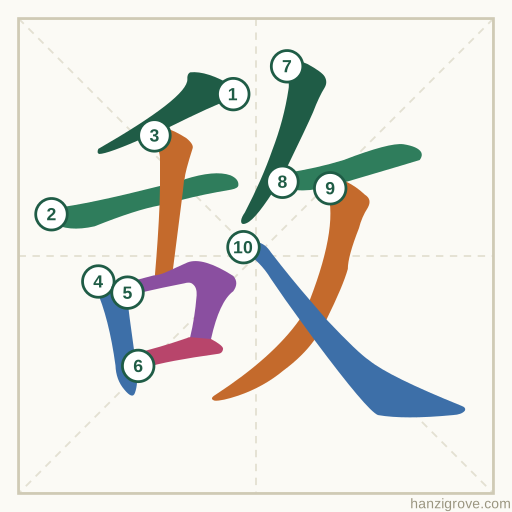
敌 (dí) means “enemy”. It is made of 舌 + 攵 and has 10 strokes.
Break 敌 into its parts
What 敌 is made of
- 舌 shé — tongue
- 千 qiān — thousand
- 丿 — falling stroke
- 十 — ten
- 口 kǒu — mouth
- 冂 — frame
- 一 — horizontal stroke
- 千 qiān — thousand
- 攵 pū — to rap
- 乂 yì — crossed strokes
- 丿 — falling stroke
- 乂 yì — crossed strokes
Origin hint: 攵 gives the meaning, 啇 gives the sound. (from the Make Me a Hanzi dataset; treat as a memory aid where history is uncertain)
敌 stroke order
Example sentences with 敌人
懒是学习最大的敌人。Lǎn shì xuéxí zuì dà de dírén.Laziness is the greatest enemy of learning.
粗心是考试的敌人。Cūxīn shì kǎoshì de dírén.Carelessness is the enemy in exams.
Words with 敌
Also built with 舌
- 乱luànmessy
- 刮guāto blow, of wind
- 括kuòto embrace
- 活huóto live
- 甜tiánsweet
- 舍shěhouse
- 舔tiǎnto lick
- 话huàwords
- 辞cíwords
- 适shìmatch
Quick facts
| Pinyin | dí |
|---|---|
| Meaning | enemy |
| Strokes | 10 |
| Radical | 舌 (tongue, #135) |
| Pattern | Left–right |
Questions about 敌
What does 敌 mean?
敌 (dí) means “enemy”.
How many strokes does 敌 have?
敌 has 10 strokes.
What is the radical of 敌?
The radical of 敌 is 舌 (shé, “tongue”), Kangxi radical number 135.
What parts make up 敌?
敌 is made of 舌 (tongue) and 攵 (to rap).
Keep learning
Start with HSK 1 · Group 1: 10 words with quick checks and spaced repeats.