
晾
晾 (liàng) means “to dry in the air”. It is made of 日 + 京 and has 12 strokes, and is an old HSK 6 word (HSK 2.0).
Break 晾 into its parts
What 晾 is made of
- 日 rì — sun; day
- 口 kǒu — mouth
- 冂 — frame
- 一 — horizontal stroke
- 一 — horizontal stroke
- 口 kǒu — mouth
- 京 jīng — capital
- 亠 tóu — lid
- 丶 — dot
- 一 — horizontal stroke
- 口 kǒu — mouth
- 冂 — frame
- 一 — horizontal stroke
- 小 xiǎo — small
- 亅 — hook
- 八 bā — eight
- 亠 tóu — lid
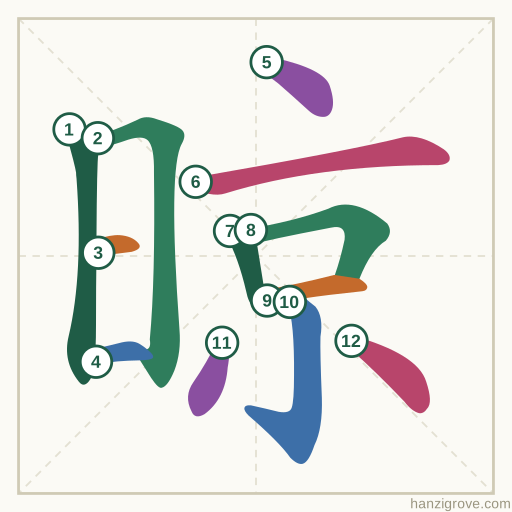
晾 stroke order
Example sentences
妈妈把衣服晾在阳台上。Māma bǎ yīfu liàng zài yángtái shàng.Mom hung the clothes out to dry on the balcony.
天气好,快把被子拿出去晾一下。Tiānqì hǎo, kuài bǎ bèizi náchūqù liàng yíxià.The weather's nice; take the quilt out to air.
Also built with 日
- 冒màoto risk
- 旦dàndawn
- 旧jiùold
- 旨zhǐaim
- 早zǎoearly
- 旬xúnten-day period
- 旱hàndry
- 时shítime
- 旷kuàngbroad
- 旺wàngto flourish
- 昂ángto rise
- 昆kūnelder brother
Quick facts
| Pinyin | liàng |
|---|---|
| Meaning | to dry in the air; to leave sb hanging |
| Strokes | 12 |
| Pattern | Left–right |
| HSK | Old HSK 6 |
Questions about 晾
What does 晾 mean?
晾 (liàng) means “to dry in the air; to leave sb hanging”.
How many strokes does 晾 have?
晾 has 12 strokes.
What parts make up 晾?
晾 is made of 日 (sun; day) and 京 (capital).
Which HSK level is 晾?
晾 is in Old HSK 6.
Learn 晾 with its group
It is part of Old HSK 6 · Group 117: a short group with quick checks and spaced repeats.