
未
未 (wèi) · not yet
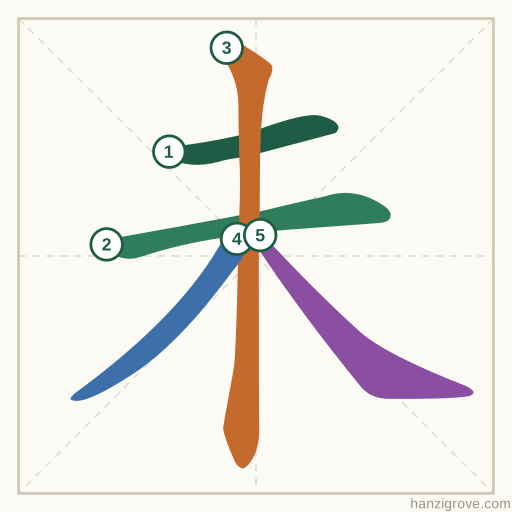
未 (wèi) means “not yet”. It is made of 一 + 木 and has 5 strokes.
Break 未 into its parts
What 未 is made of
- 一 — horizontal stroke
- 木 mù — tree
- 十 — ten
- 一 — horizontal stroke
- 丨 — vertical stroke
- 八 bā — eight
- 十 — ten
Origin hint: A wheat plant that has not yet borne fruit; compare 來 (from the Make Me a Hanzi dataset; treat as a memory aid where history is uncertain)
未 stroke order
Example sentences with 未必
贵的东西未必好。Guì de dōngxi wèibì hǎo.Expensive things are not necessarily good.
他未必知道这件事。Tā wèibì zhīdào zhè jiàn shì.He may not know about this.
Words with 未
Also built with 一
- 七qīseven
- 万wànten thousand
- 丈zhànggentleman
- 三sānthree
- 上shàngon
- 下xiàdown
- 不bùnot
- 与yǔand
- 专zhuānconcentrated
- 且qiěmoreover
- 丘qiūmound
- 丙bǐngthird
Quick facts
| Pinyin | wèi |
|---|---|
| Meaning | not yet |
| Strokes | 5 |
| Radical | 木 (tree, #75) |
| Pattern | Overlapping |
Questions about 未
What does 未 mean?
未 (wèi) means “not yet”.
How many strokes does 未 have?
未 has 5 strokes.
What is the radical of 未?
The radical of 未 is 木 (mù, “tree”), Kangxi radical number 75.
What parts make up 未?
未 is made of 一 (horizontal stroke) and 木 (tree).
Keep learning
Start with HSK 1 · Group 1: 10 words with quick checks and spaced repeats.