
某
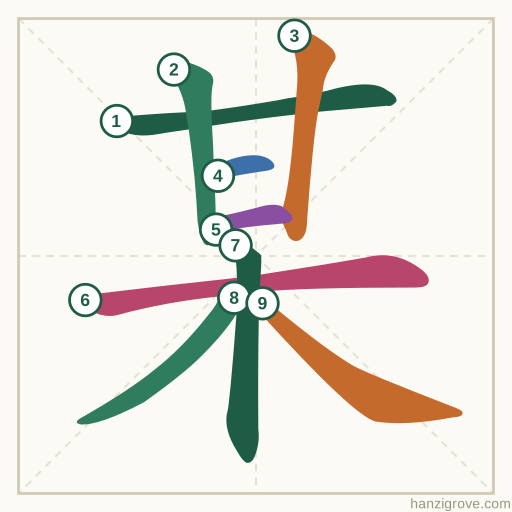
某 (mǒu) means “some”. It is made of 甘 + 木 and has 9 strokes, and is an HSK 3 word in the 2021 standard.
Break 某 into its parts
What 某 is made of
- 甘 gān — sweet
- 卄 niàn — twenty
- 十 — ten
- 丨 — vertical stroke
- 二 — two strokes
- 一 — horizontal stroke
- 一 — horizontal stroke
- 卄 niàn — twenty
- 木 mù — tree
- 十 — ten
- 一 — horizontal stroke
- 丨 — vertical stroke
- 八 bā — eight
- 十 — ten
Origin hint: The sweet 甘 fruit of a certain tree 木 (from the Make Me a Hanzi dataset; treat as a memory aid where history is uncertain)
某 stroke order
Example sentences
某天我在街上遇到了他。Mǒu tiān wǒ zài jiē shang yù dào le tā.One day I ran into him on the street.
他住在某个小城市。Tā zhù zài mǒu ge xiǎo chéngshì.He lives in a certain small city.
Also built with 甘
Quick facts
| Pinyin | mǒu |
|---|---|
| Meaning | some; a certain |
| Strokes | 9 |
| Radical | 木 (tree, #75) |
| Pattern | Top–bottom |
| HSK | HSK 3 (2021) · Old HSK 5 |
Questions about 某
What does 某 mean?
某 (mǒu) means “some; a certain”.
How many strokes does 某 have?
某 has 9 strokes.
What is the radical of 某?
The radical of 某 is 木 (mù, “tree”), Kangxi radical number 75.
What parts make up 某?
某 is made of 甘 (sweet) and 木 (tree).
Which HSK level is 某?
某 is in HSK 3 (2021) and Old HSK 5.
Learn 某 with its group
It is part of HSK 3 (2021) · Group 5: a short group with quick checks and spaced repeats.