
次
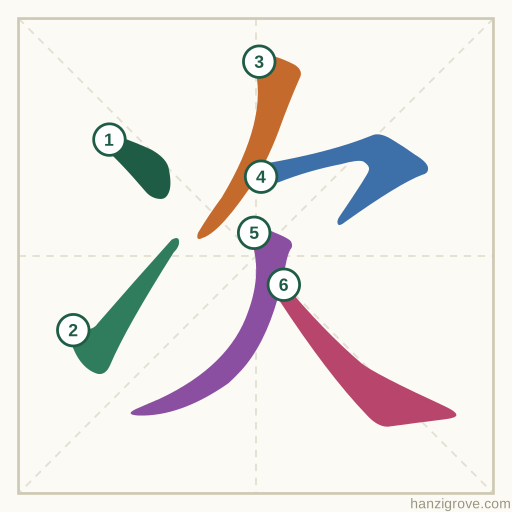
次 (cì) means “measure word for times”. It is made of 冫 + 欠 and has 6 strokes, and is an HSK 2 word in the current exam syllabus (2025).
Break 次 into its parts
What 次 is made of
- 冫 bīng — ice
- 丶 — dot
- 欠 qiàn — to lack
- ⺈ — top shape
- 人 rén — person
Origin hint: A person 欠 yawning multiple times 冫 (from the Make Me a Hanzi dataset; treat as a memory aid where history is uncertain)
次 stroke order
Example sentences
我去过两次北京。Wǒ qùguo liǎng cì Běijīng.I've been to Beijing twice.
请你再说一次。Qǐng nǐ zài shuō yī cì.Please say it once more.
Words with 次
- 上次shàngcìlast time
- 下次xiàcìnext time
- 其次qícìnext
- 多次duōcìmany times
- 次要cìyàosecondary
- 层次céngcìlevel
- 次品cìpǐndefective product
- 次序cìxùorder
- 档次dàngcìgrade
- 屡次lǚcìrepeatedly
- 名次míngcìplace in a ranking
- 此次cǐcìthis time
- 再次zàicìonce again
Also built with 冫
- 习xíto study
- 冰bīngice
- 冲chōngto rinse
- 决juéto decide
- 况kuàngcondition
- 冷lěngcold
- 冻dòngto freeze
- 净jìngclean
- 凄qībitter cold
- 准zhǔnto allow
- 凉liángcool
- 凌língpure
Quick facts
| Pinyin | cì |
|---|---|
| Meaning | measure word for times; order; second-rate |
| Strokes | 6 |
| Radical | 欠 (lack, #76) |
| Pattern | Left–right |
| HSK | HSK 2 (exam 2025) · HSK 4 (2021) · Old HSK 2 |
Questions about 次
What does 次 mean?
次 (cì) means “measure word for times; order; second-rate”.
How many strokes does 次 have?
次 has 6 strokes.
What is the radical of 次?
The radical of 次 is 欠 (qiàn, “lack”), Kangxi radical number 76.
What parts make up 次?
次 is made of 冫 (ice) and 欠 (to lack).
Which HSK level is 次?
次 is in HSK 2 (exam 2025) and HSK 4 (2021) and Old HSK 2.
Learn 次 with its group
It is part of HSK 1 (2021) · Group 14: a short group with quick checks and spaced repeats.