
歪
歪 (wāi) means “crooked”. It is made of 不 + 正 and has 9 strokes, and is an old HSK 5 word (HSK 2.0).
Break 歪 into its parts
What 歪 is made of
- 不 bù — no
- 一 — horizontal stroke
- 正 zhèng — straight
- 一 — horizontal stroke
- 止 zhǐ — to stop
- 上 shàng — above
- 丨 — vertical stroke
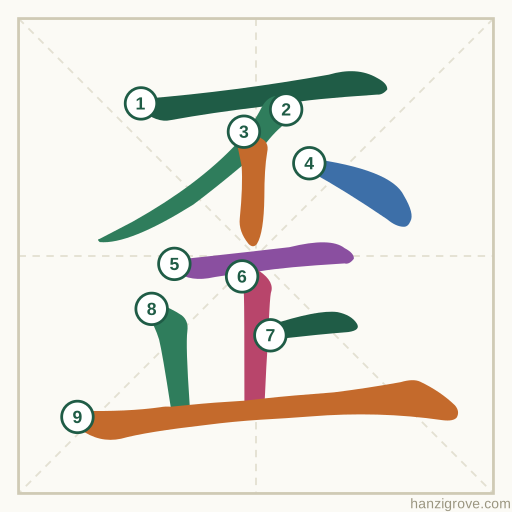
歪 stroke order
Example sentences
墙上的画挂歪了。Qiáng shàng de huà guà wāi le.The picture on the wall is crooked.
你的帽子戴歪了。Nǐ de màozi dài wāi le.Your hat is on crooked.
Words with 歪
Also built with 不
Quick facts
| Pinyin | wāi |
|---|---|
| Meaning | crooked; askew; slanting |
| Strokes | 9 |
| Pattern | Top–bottom |
| HSK | Old HSK 5 |
Questions about 歪
What does 歪 mean?
歪 (wāi) means “crooked; askew; slanting”.
How many strokes does 歪 have?
歪 has 9 strokes.
What parts make up 歪?
歪 is made of 不 (no) and 正 (straight).
Which HSK level is 歪?
歪 is in Old HSK 5.
Learn 歪 with its group
It is part of Old HSK 5 · Group 96: a short group with quick checks and spaced repeats.