
浓
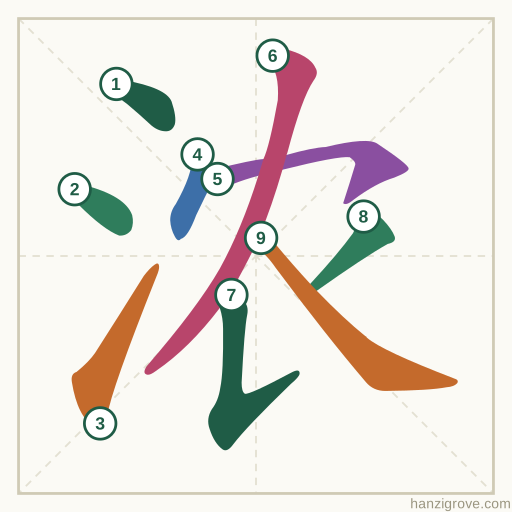
浓 (nóng) means “strong (coffee, smell)”. It is made of 氵 + 农 and has 9 strokes, and is an HSK 4 word in the 2021 standard.
Break 浓 into its parts
What 浓 is made of
- 氵 shuǐ — water
- 农 nóng — agriculture
- 冖 mì — cover
Origin hint: 氵 gives the meaning, 农 gives the sound. (from the Make Me a Hanzi dataset; treat as a memory aid where history is uncertain)
浓 stroke order
Example sentences
这杯咖啡太浓了。Zhè bēi kāfēi tài nóng le.This cup of coffee is too strong.
花的香味很浓。Huā de xiāngwèi hěn nóng.The flowers have a strong fragrance.
Words with 浓
Also built with 氵
- 汁zhījuice
- 汇huìto send (money)
- 汉hànHan
- 汗hànsweat
- 江jiāngriver
- 池chípool
- 污wūfilthy
- 汤tāngsoup
- 汰tàito eliminate
- 汹xiōngturbulent
- 汽qìsteam
- 沃wòto water
Quick facts
| Pinyin | nóng |
|---|---|
| Meaning | strong (coffee, smell); thick; dense |
| Strokes | 9 |
| Radical | 水 (water, #85) |
| Pattern | Left–right |
| HSK | HSK 4 (2021) · Old HSK 5 |
Questions about 浓
What does 浓 mean?
浓 (nóng) means “strong (coffee, smell); thick; dense”.
How many strokes does 浓 have?
浓 has 9 strokes.
What is the radical of 浓?
The radical of 浓 is 水 (shuǐ, “water”), Kangxi radical number 85.
What parts make up 浓?
浓 is made of 氵 (water) and 农 (agriculture).
Which HSK level is 浓?
浓 is in HSK 4 (2021) and Old HSK 5.
Learn 浓 with its group
It is part of HSK 4 (2021) · Group 42: a short group with quick checks and spaced repeats.