
涕
涕 (tì) · tears
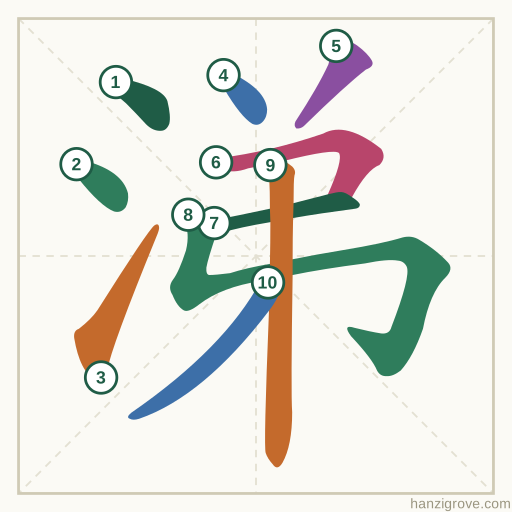
10 strokesLeft–right
涕 (tì) means “tears”. It is made of 氵 + 弟 and has 10 strokes.
Break 涕 into its parts
What 涕 is made of
- 氵 shuǐ — water
- 弟 dì — young brother
- 丷 ha — kwukyel
- 丶 — dot
- 弓 gōng — bow
- 丷 ha — kwukyel
涕 stroke order
Example sentences with 鼻涕
他感冒了,一直流鼻涕。Tā gǎnmào le, yìzhí liú bítì.He has a cold and a runny nose.
快用纸擦擦鼻涕。Kuài yòng zhǐ cācā bítì.Quick, wipe your nose with a tissue.
Words with 涕
Also built with 氵
- 汁zhījuice
- 汇huìto send (money)
- 汉hànHan
- 汗hànsweat
- 江jiāngriver
- 池chípool
- 污wūfilthy
- 汤tāngsoup
- 汰tàito eliminate
- 汹xiōngturbulent
- 汽qìsteam
- 沃wòto water
Quick facts
| Pinyin | tì |
|---|---|
| Meaning | tears |
| Strokes | 10 |
| Pattern | Left–right |
Questions about 涕
What does 涕 mean?
涕 (tì) means “tears”.
How many strokes does 涕 have?
涕 has 10 strokes.
What parts make up 涕?
涕 is made of 氵 (water) and 弟 (young brother).
Keep learning
Start with HSK 1 · Group 1: 10 words with quick checks and spaced repeats.