
烘
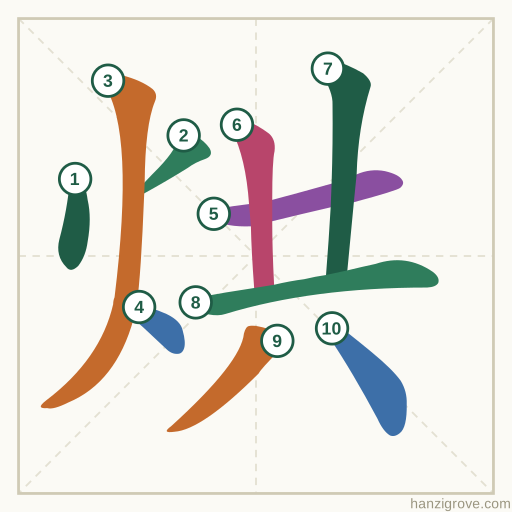
烘 (hōng) means “to bake”. It is made of 火 + 共 and has 10 strokes, and is an old HSK 6 word (HSK 2.0).
Break 烘 into its parts
What 烘 is made of
- 火 huǒ — fire
- 丷 ha — kwukyel
- 丶 — dot
- 人 rén — person
- 丷 ha — kwukyel
- 共 gòng — all
- 廾 gǒng — two hands
- 一 — horizontal stroke
- 八 bā — eight
烘 stroke order
Example sentences
妈妈在烤箱里烘面包。Māma zài kǎoxiāng lǐ hōng miànbāo.Mom is baking bread in the oven.
把湿衣服放在火边烘一下。Bǎ shī yīfu fàngzài huǒ biān hōng yíxià.Dry the wet clothes by the fire.
Also built with 火
- 伙huǒgroup
- 灭mièto extinguish
- 灯dēnglamp
- 灰huīash
- 灵língspirit
- 灶zàokitchen
- 灾zāidisaster
- 灿cànvivid
- 炉lúfireplace
- 炊chuīmeal
- 炎yánflame
- 炒chǎoto stir-fry
Quick facts
| Pinyin | hōng |
|---|---|
| Meaning | to bake; to dry by a fire |
| Strokes | 10 |
| Pattern | Left–right |
| HSK | Old HSK 6 |
Questions about 烘
What does 烘 mean?
烘 (hōng) means “to bake; to dry by a fire”.
How many strokes does 烘 have?
烘 has 10 strokes.
What parts make up 烘?
烘 is made of 火 (fire) and 共 (all).
Which HSK level is 烘?
烘 is in Old HSK 6.
Learn 烘 with its group
It is part of Old HSK 6 · Group 77: a short group with quick checks and spaced repeats.