
熟
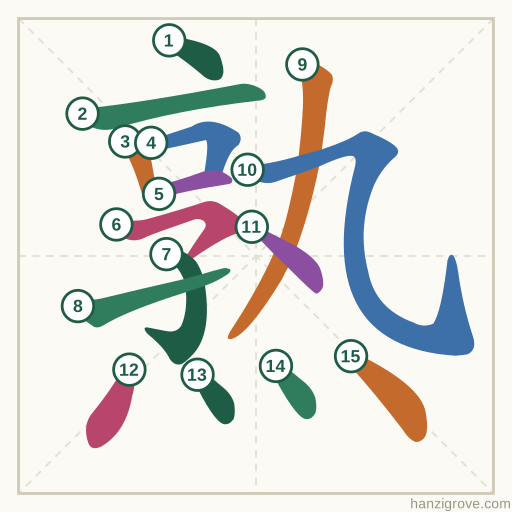
熟 (shú) means “ripe”. It is made of 孰 + 灬 and has 15 strokes, and is an HSK 4 word in the current exam syllabus (2025).
Break 熟 into its parts
What 熟 is made of
- 孰 shú — who? which? what? which one?
- 享 xiǎng — to share
- 亠 tóu — lid
- 口 kǒu — mouth
- 子 zǐ — child
- 丸 wán — ball
- 九 jiǔ — nine
- 丶 — dot
- 享 xiǎng — to share
- 灬 huǒ — fire
Origin hint: 灬 gives the meaning, 孰 gives the sound. (from the Make Me a Hanzi dataset; treat as a memory aid where history is uncertain)
熟 stroke order
Example sentences
苹果熟了。Píngguǒ shú le.The apples are ripe.
我跟他不太熟。Wǒ gēn tā bùtài shú.I don't know him very well.
Words with 熟
Quick facts
| Pinyin | shú |
|---|---|
| Meaning | ripe; cooked; familiar |
| Strokes | 15 |
| Radical | 火 (fire, #86) |
| Pattern | Top–bottom |
| HSK | HSK 4 (exam 2025) · HSK 2 (2021) |
Questions about 熟
What does 熟 mean?
熟 (shú) means “ripe; cooked; familiar”.
How many strokes does 熟 have?
熟 has 15 strokes.
What is the radical of 熟?
The radical of 熟 is 火 (huǒ, “fire”), Kangxi radical number 86.
What parts make up 熟?
熟 is made of 孰 (who? which? what? which one?) and 灬 (fire).
Which HSK level is 熟?
熟 is in HSK 4 (exam 2025) and HSK 2 (2021).
Learn 熟 with its group
It is part of HSK 2 (2021) · Group 32: a short group with quick checks and spaced repeats.