
盛
盛 (chéng) means “to fill (a bowl)”. It is made of 成 + 皿 and has 11 strokes, and is an old HSK 6 word (HSK 2.0).
Break 盛 into its parts
What 盛 is made of
- 成 chéng — to accomplish
- 丁 dīng — male adult
- 戈 gē — spear
- 皿 mǐn — dish
- 一 — horizontal stroke
盛 stroke order
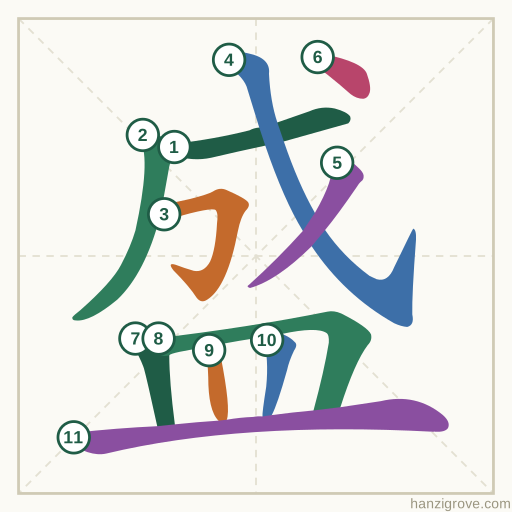
Example sentences
妈妈给我盛了一碗饭。Māma gěi wǒ chéng le yī wǎn fàn.Mom filled a bowl of rice for me.
请帮我盛一碗汤。Qǐng bāng wǒ chéng yī wǎn tāng.Please ladle me a bowl of soup.
Words with 盛
- 昌盛chāngshèngprosperous
- 丰盛fēngshèngrich
- 茂盛màoshènglush
- 盛产shèngchǎnto produce in abundance
- 盛开shèngkāito be in full bloom
- 盛情shèngqínggreat kindness
- 盛行shèngxíngto be popular
Also built with 成
Quick facts
| Pinyin | chéng |
|---|---|
| Meaning | to fill (a bowl); to ladle |
| Strokes | 11 |
| Pattern | Top–bottom |
| HSK | Old HSK 6 |
Questions about 盛
What does 盛 mean?
盛 (chéng) means “to fill (a bowl); to ladle”.
How many strokes does 盛 have?
盛 has 11 strokes.
What parts make up 盛?
盛 is made of 成 (to accomplish) and 皿 (dish).
Which HSK level is 盛?
盛 is in Old HSK 6.
Learn 盛 with its group
It is part of Old HSK 6 · Group 27: a short group with quick checks and spaced repeats.