
盯
盯 (dīng) means “to stare at”. It is made of 目 + 丁 and has 7 strokes, and is an old HSK 6 word (HSK 2.0).
Break 盯 into its parts
What 盯 is made of
- 目 mù — eye
- 口 kǒu — mouth
- 冂 — frame
- 一 — horizontal stroke
- 二 — two strokes
- 一 — horizontal stroke
- 一 — horizontal stroke
- 口 kǒu — mouth
- 丁 dīng — male adult
盯 stroke order
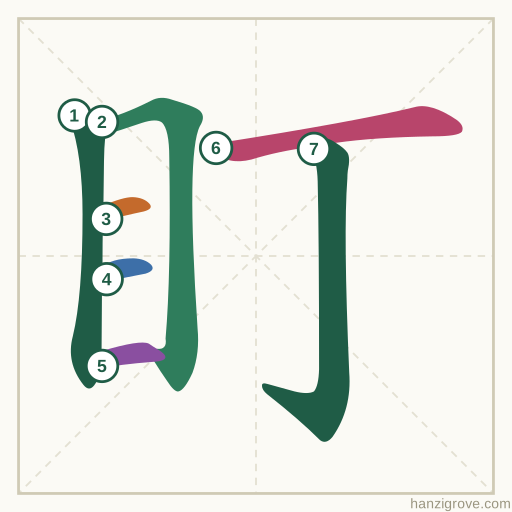
Example sentences
他一直盯着电脑屏幕。Tā yìzhí dīng zhe diànnǎo píngmù.He kept staring at the computer screen.
你帮我盯着点儿孩子。Nǐ bāng wǒ dīng zhe diǎnr háizi.Keep an eye on the kid for me.
Also built with 目
- 具jùtool
- 冒màoto risk
- 泪lèitears
- 盲mángblind
- 直zhístraight
- 相xiāngmutual
- 盼pànto look
- 省shěngto save
- 眉méieyebrows
- 看kànto look
- 眠miánsleep
- 眨zhǎto blink
Quick facts
| Pinyin | dīng |
|---|---|
| Meaning | to stare at; to keep an eye on |
| Strokes | 7 |
| Pattern | Left–right |
| HSK | Old HSK 6 |
Questions about 盯
What does 盯 mean?
盯 (dīng) means “to stare at; to keep an eye on”.
How many strokes does 盯 have?
盯 has 7 strokes.
What parts make up 盯?
盯 is made of 目 (eye) and 丁 (male adult).
Which HSK level is 盯?
盯 is in Old HSK 6.
Learn 盯 with its group
It is part of Old HSK 6 · Group 44: a short group with quick checks and spaced repeats.