
硬
硬 (yìng) means “hard”. It is made of 石 + 更 and has 12 strokes, and is an old HSK 5 word (HSK 2.0).
Break 硬 into its parts
What 硬 is made of
- 石 shí — stone
- 厂 chǎng — cliff
- 口 kǒu — mouth
- 冂 — frame
- 一 — horizontal stroke
- 更 gèng — more
- 一 — horizontal stroke
- 曰 yuē — to speak
- 口 kǒu — mouth
- 一 — horizontal stroke
- 乂 yì — crossed strokes
- 丿 — falling stroke
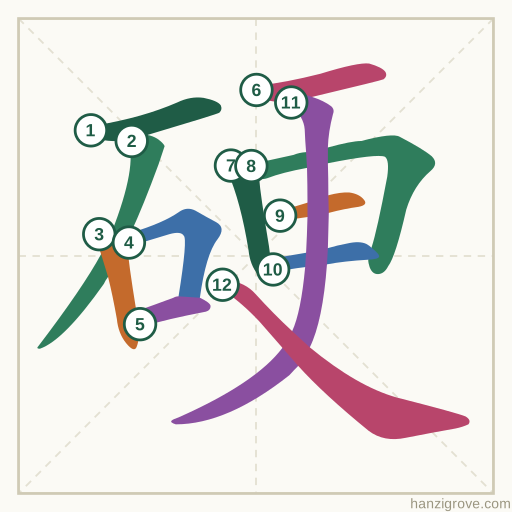
硬 stroke order
Example sentences
这块面包太硬了。Zhè kuài miànbāo tài yìng le.This piece of bread is too hard.
这张床有点儿硬。Zhè zhāng chuáng yǒudiǎnr yìng.This bed is a bit hard.
Words with 硬
Also built with 石
- 岩yáncliff
- 拓tàto develop
- 矿kuàngmine
- 码mǎnumber
- 砍kǎnto chop
- 研yánto grind
- 砖zhuānbrick
- 破pòbroken
- 砸záto smash
- 础chǔfoundation stone
- 硕shuògreat
- 确quècertain
Quick facts
| Pinyin | yìng |
|---|---|
| Meaning | hard; stiff; firm |
| Strokes | 12 |
| Pattern | Left–right |
| HSK | Old HSK 5 |
Questions about 硬
What does 硬 mean?
硬 (yìng) means “hard; stiff; firm”.
How many strokes does 硬 have?
硬 has 12 strokes.
What parts make up 硬?
硬 is made of 石 (stone) and 更 (more).
Which HSK level is 硬?
硬 is in Old HSK 5.
Learn 硬 with its group
It is part of Old HSK 5 · Group 114: a short group with quick checks and spaced repeats.