
绣
绣 (xiù) means “to embroider”. It is made of 纟 + 秀 and has 10 strokes, and is an old HSK 6 word (HSK 2.0).
Break 绣 into its parts
What 绣 is made of
- 纟 sī — silk
- 一 — horizontal stroke
- 秀 xiù — elegant
- 禾 hé — cereal
- 丿 — falling stroke
- 木 mù — tree
- 乃 nǎi — then
- 丿 — falling stroke
- 禾 hé — cereal
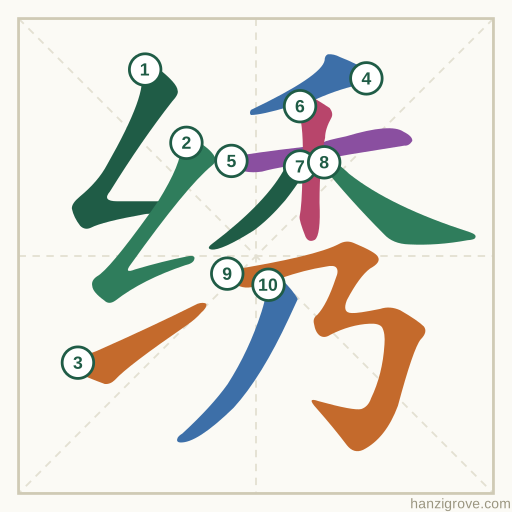
绣 stroke order
Example sentences
奶奶在枕头上绣了一朵花。Nǎinai zài zhěntou shàng xiù le yī duǒ huā.Grandma embroidered a flower on the pillow.
她会绣很多漂亮的图案。Tā huì xiù hěnduō piàoliang de tú'àn.She can embroider many beautiful patterns.
Also built with 纟
- 纠jiūtangled
- 红hóngred
- 纤xiānfine
- 约yuēto arrange to meet
- 级jílevel
- 纪jìdiscipline
- 纬wěiwarp and woof
- 纯chúnpure
- 纲gāngprogram
- 纳nàto adopt
- 纵zòngto indulge in
- 纷fēntangled
Quick facts
| Pinyin | xiù |
|---|---|
| Meaning | to embroider; embroidery |
| Strokes | 10 |
| Pattern | Left–right |
| HSK | Old HSK 6 |
Questions about 绣
What does 绣 mean?
绣 (xiù) means “to embroider; embroidery”.
How many strokes does 绣 have?
绣 has 10 strokes.
What parts make up 绣?
绣 is made of 纟 (silk) and 秀 (elegant).
Which HSK level is 绣?
绣 is in Old HSK 6.
Learn 绣 with its group
It is part of Old HSK 6 · Group 205: a short group with quick checks and spaced repeats.