
缓
缓 (huǎn) · slow
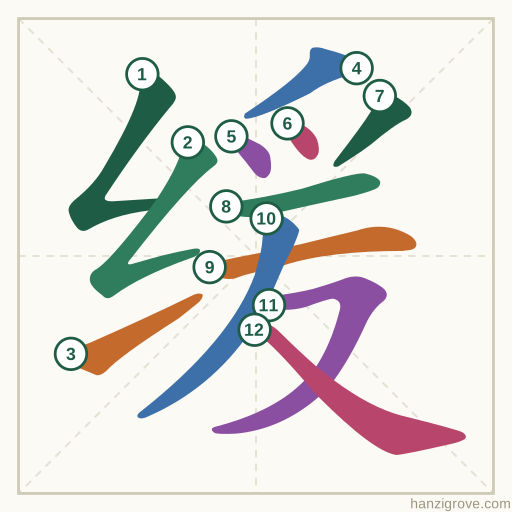
缓 (huǎn) means “slow”. It is made of 纟 + 爰 and has 12 strokes.
Break 缓 into its parts
What 缓 is made of
- 纟 sī — silk
- 一 — horizontal stroke
- 爰 yuán — to lead on to
- 爫 zhǎo — claws
- 一 — horizontal stroke
- 友 yǒu — friend
- 又 yòu — and
Origin hint: 纟 gives the meaning, 爰 gives the sound. (from the Make Me a Hanzi dataset; treat as a memory aid where history is uncertain)
缓 stroke order
Example sentences with 缓解
这种药能缓解头疼。Zhè zhǒng yào néng huǎnjiě tóu téng.This medicine can relieve headaches.
怎样缓解工作压力?Zěnyàng huǎnjiě gōngzuò yālì?How can you ease work stress?
Words with 缓
Also built with 纟
- 纠jiūtangled
- 红hóngred
- 纤xiānfine
- 约yuēto arrange to meet
- 级jílevel
- 纪jìdiscipline
- 纬wěiwarp and woof
- 纯chúnpure
- 纲gāngprogram
- 纳nàto adopt
- 纵zòngto indulge in
- 纷fēntangled
Quick facts
| Pinyin | huǎn |
|---|---|
| Meaning | slow |
| Strokes | 12 |
| Radical | 糸 (silk, #120) |
| Pattern | Left–right |
Questions about 缓
What does 缓 mean?
缓 (huǎn) means “slow”.
How many strokes does 缓 have?
缓 has 12 strokes.
What is the radical of 缓?
The radical of 缓 is 糸 (mì, “silk”), Kangxi radical number 120.
What parts make up 缓?
缓 is made of 纟 (silk) and 爰 (to lead on to).
Keep learning
Start with HSK 1 · Group 1: 10 words with quick checks and spaced repeats.