
置
置 (zhì) · to lay out
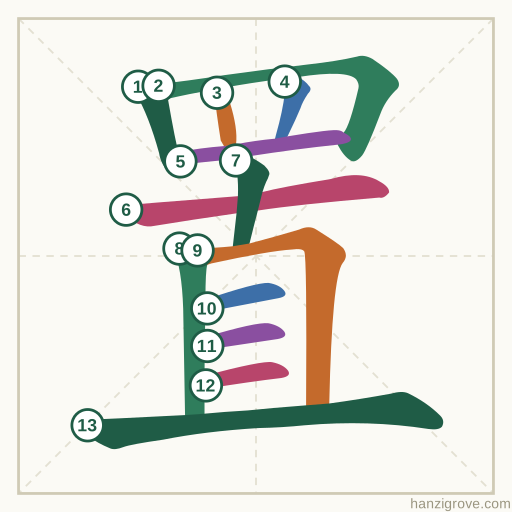
置 (zhì) means “to lay out”. It is made of 罒 + 直 and has 13 strokes.
Break 置 into its parts
What 置 is made of
- 罒 wǎng — net
- 口 kǒu — mouth
- 冂 — frame
- 一 — horizontal stroke
- 口 kǒu — mouth
- 直 zhí — straight
- 十 — ten
- 一 — horizontal stroke
- 丨 — vertical stroke
- 目 mù — eye
- 口 kǒu — mouth
- 二 — two strokes
- 一 — horizontal stroke
- 十 — ten
Origin hint: 罒 gives the meaning, 直 gives the sound. (from the Make Me a Hanzi dataset; treat as a memory aid where history is uncertain)
置 stroke order
Example sentences with 安置
新同学被安置在第一排。Xīn tóngxué bèi ānzhì zài dìyī pái.The new student was given a seat in the first row.
这些行李安置在哪里?Zhèxiē xíngli ānzhì zài nǎlǐ?Where should we put this luggage?
Words with 置
- 安置ānzhìto place
- 布置bùzhìto decorate
- 设置shèzhìto set up
- 位置wèizhiposition
- 装置zhuāngzhìdevice
- 处置chǔzhìto handle
Also built with 罒
Quick facts
| Pinyin | zhì |
|---|---|
| Meaning | to lay out |
| Strokes | 13 |
| Radical | 网 (net, #122) |
| Pattern | Top–bottom |
Questions about 置
What does 置 mean?
置 (zhì) means “to lay out”.
How many strokes does 置 have?
置 has 13 strokes.
What is the radical of 置?
The radical of 置 is 网 (wǎng, “net”), Kangxi radical number 122.
What parts make up 置?
置 is made of 罒 (net) and 直 (straight).
Keep learning
Start with HSK 1 · Group 1: 10 words with quick checks and spaced repeats.