
胃
胃 (wèi) means “stomach”. It is made of 田 + ⺼ and has 9 strokes, and is an old HSK 5 word (HSK 2.0).
Break 胃 into its parts
What 胃 is made of
- 田 tián — field
- 冂 — frame
- 丨 — vertical stroke
- 土 tǔ — earth
- 十 — ten
- 一 — horizontal stroke
- 冂 — frame
- ⺼ — meat
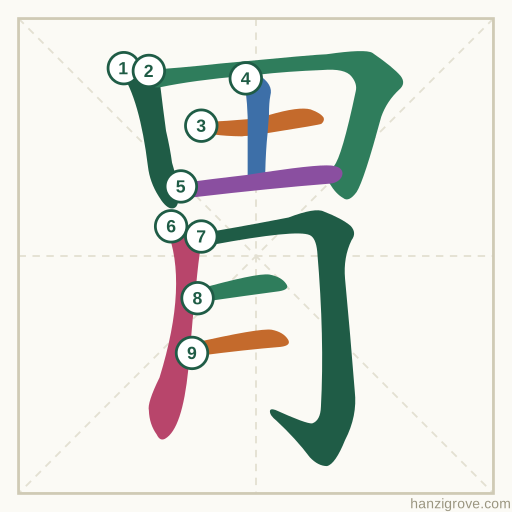
胃 stroke order
Example sentences
我今天胃不太舒服。Wǒ jīntiān wèi bù tài shūfu.My stomach doesn't feel well today.
吃太多冰的东西对胃不好。Chī tài duō bīng de dōngxi duì wèi bù hǎo.Eating too much cold food is bad for the stomach.
Words with 胃
Also built with 田
- 备bèito prepare
- 奋fènto strive
- 思sīto think
- 果guǒfruit
- 男nánmale
- 界jièboundary
- 畏wèifear
- 畔pànside
- 留liúto leave (behind)
- 畜chùlivestock
- 略lüèapproximate
- 番fāna time
Quick facts
| Pinyin | wèi |
|---|---|
| Meaning | stomach |
| Strokes | 9 |
| Pattern | Top–bottom |
| HSK | Old HSK 5 |
Questions about 胃
What does 胃 mean?
胃 (wèi) means “stomach”.
How many strokes does 胃 have?
胃 has 9 strokes.
What parts make up 胃?
胃 is made of 田 (field) and ⺼ (meat).
Which HSK level is 胃?
胃 is in Old HSK 5.
Learn 胃 with its group
It is part of Old HSK 5 · Group 99: a short group with quick checks and spaced repeats.