
背
HSK 4 (exam 2025)HSK 3 (2021)Old HSK 5
背 (bēi) · to carry on one's back
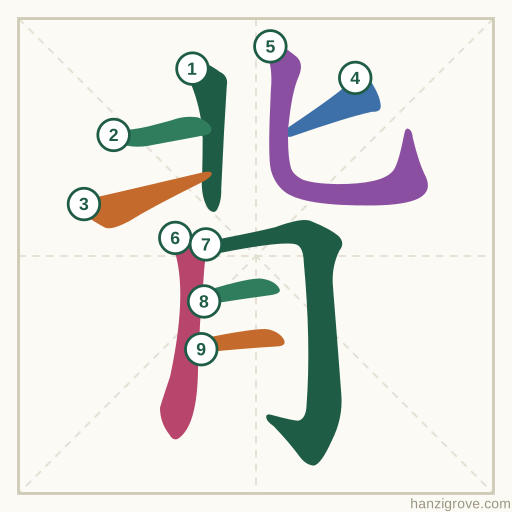
背 (bēi) means “to carry on one's back”. It is made of 北 + ⺼ and has 9 strokes, and is an HSK 4 word in the current exam syllabus (2025).
Break 背 into its parts
What 背 is made of
- 北 běi — north
- 匕 bǐ — spoon
- 乚 — hook stroke
- 丿 — falling stroke
- 匕 bǐ — spoon
- ⺼ — meat
Origin hint: ⺼ gives the meaning, 北 gives the sound. (from the Make Me a Hanzi dataset; treat as a memory aid where history is uncertain)
背 stroke order
Example sentences
他背着一个大书包。Tā bēi zhe yī ge dà shūbāo.He's carrying a big schoolbag on his back.
书太多了,我背不动。Shū tài duō le, wǒ bēi bu dòng.There are too many books; I can't carry them.
Words with 背
- 背后bèihòubehind
- 背景bèijǐngbackground
- 后背hòubèiback (of the body)
- 背叛bèipànto betray
- 背诵bèisòngto recite
- 违背wéibèito go against
- 背包bēibāobackpack
Also built with 北
Quick facts
| Pinyin | bēi |
|---|---|
| Meaning | to carry on one's back |
| Strokes | 9 |
| Radical | 肉 (meat; flesh, #130) |
| Pattern | Top–bottom |
| HSK | HSK 4 (exam 2025) · HSK 3 (2021) · Old HSK 5 |
Questions about 背
What does 背 mean?
背 (bēi) means “to carry on one's back”.
How many strokes does 背 have?
背 has 9 strokes.
What is the radical of 背?
The radical of 背 is 肉 (ròu, “meat; flesh”), Kangxi radical number 130.
What parts make up 背?
背 is made of 北 (north) and ⺼ (meat).
Which HSK level is 背?
背 is in HSK 4 (exam 2025) and HSK 3 (2021) and Old HSK 5.
Learn 背 with its group
It is part of HSK 2 (2021) · Group 17: a short group with quick checks and spaced repeats.