
臂
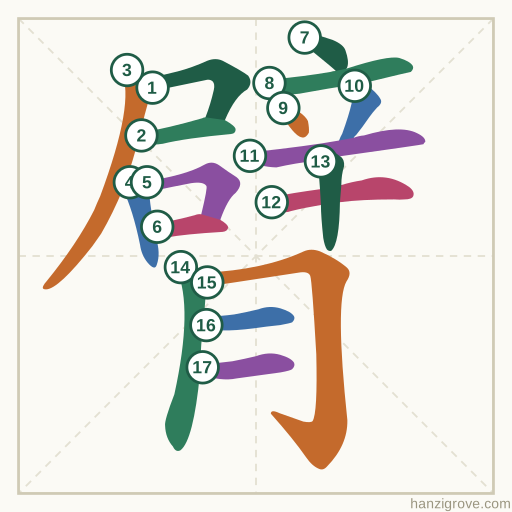
臂 (bì) means “arm”. It is made of 辟 + ⺼ and has 17 strokes, and is an old HSK 6 word (HSK 2.0).
Break 臂 into its parts
What 臂 is made of
- 辟 pì — law
- 尸 shī — body
- 丿 — falling stroke
- 口 kǒu — mouth
- 冂 — frame
- 一 — horizontal stroke
- 辛 xīn — bitter
- 立 lì — to stand
- 十 — ten
- 尸 shī — body
- ⺼ — meat
臂 stroke order
Example sentences
他的手臂受伤了。Tā de shǒubì shòushāng le.He injured his arm.
她张开双臂拥抱了孩子。Tā zhāngkāi shuāngbì yōngbào le háizi.She opened her arms and hugged the child.
Also built with 辟
Quick facts
| Pinyin | bì |
|---|---|
| Meaning | arm |
| Strokes | 17 |
| Pattern | Top–bottom |
| HSK | Old HSK 6 |
Questions about 臂
What does 臂 mean?
臂 (bì) means “arm”.
How many strokes does 臂 have?
臂 has 17 strokes.
What parts make up 臂?
臂 is made of 辟 (law) and ⺼ (meat).
Which HSK level is 臂?
臂 is in Old HSK 6.
Learn 臂 with its group
It is part of Old HSK 6 · Group 11: a short group with quick checks and spaced repeats.