
舞
舞 (wǔ) · to dance
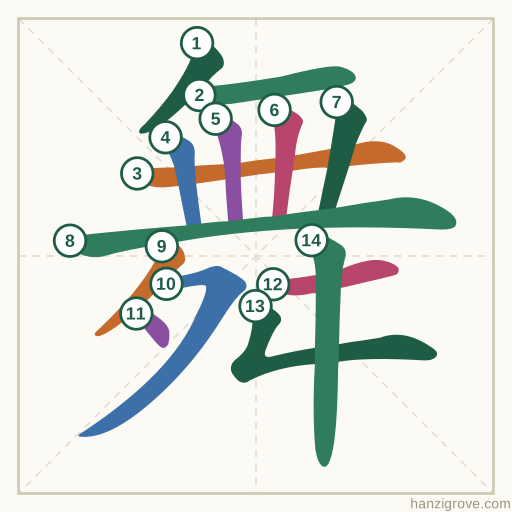
舞 (wǔ) means “to dance”. It is made of 無 + 舛 and has 14 strokes.
Break 舞 into its parts
What 舞 is made of
- 無 wú — no
- 舛 chuǎn — mistaken
- 夕 xī — evening
- 勹 bāo — wrap shape
- 丶 — dot
- 夕 xī — evening
Origin hint: A hand 舛 holding a fan (from the Make Me a Hanzi dataset; treat as a memory aid where history is uncertain)
舞 stroke order
Example sentences with 跳舞
她很喜欢跳舞。Tā hěn xǐhuan tiàowǔ.She loves dancing.
你会跳舞吗?Nǐ huì tiàowǔ ma?Can you dance?
Words with 舞
Quick facts
| Pinyin | wǔ |
|---|---|
| Meaning | to dance |
| Strokes | 14 |
| Radical | 舛 (oppose, #136) |
| Pattern | Top–bottom |
Questions about 舞
What does 舞 mean?
舞 (wǔ) means “to dance”.
How many strokes does 舞 have?
舞 has 14 strokes.
What is the radical of 舞?
The radical of 舞 is 舛 (chuǎn, “oppose”), Kangxi radical number 136.
What parts make up 舞?
舞 is made of 無 (no) and 舛 (mistaken).
Keep learning
Start with HSK 1 · Group 1: 10 words with quick checks and spaced repeats.