
谓
谓 (wèi) · to call
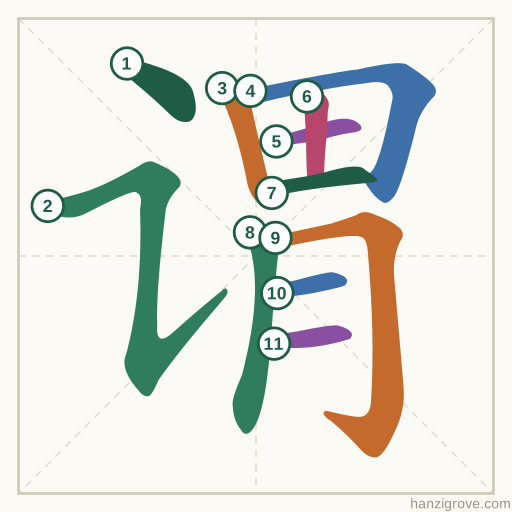
谓 (wèi) means “to call”. It is made of 讠 + 胃 and has 11 strokes.
Break 谓 into its parts
What 谓 is made of
- 讠 yán — speech
- 胃 wèi — stomach
- 田 tián — field
- 冂 — frame
- 土 tǔ — earth
- ⺼ — meat
- 田 tián — field
Origin hint: 讠 gives the meaning, 胃 gives the sound. (from the Make Me a Hanzi dataset; treat as a memory aid where history is uncertain)
谓 stroke order
Example sentences with 无所谓
去哪儿吃饭我无所谓。Qù nǎr chī fàn wǒ wúsuǒwèi.I don't mind where we eat.
你真的无所谓吗?Nǐ zhēn de wúsuǒwèi ma?Do you really not care?
Words with 谓
Also built with 讠
- 计jìto calculate
- 订dìngto book
- 认rènto know
- 讥jīto ridicule
- 讨tǎoto haggle
- 让ràngto let
- 训xùnto teach
- 议yìto consult
- 讯xùnnews
- 记jìto remember
- 讲jiǎngto speak
- 讳huìtaboo
Quick facts
| Pinyin | wèi |
|---|---|
| Meaning | to call |
| Strokes | 11 |
| Radical | 言 (speech, #149) |
| Pattern | Left–right |
Questions about 谓
What does 谓 mean?
谓 (wèi) means “to call”.
How many strokes does 谓 have?
谓 has 11 strokes.
What is the radical of 谓?
The radical of 谓 is 言 (yán, “speech”), Kangxi radical number 149.
What parts make up 谓?
谓 is made of 讠 (speech) and 胃 (stomach).
Keep learning
Start with HSK 1 · Group 1: 10 words with quick checks and spaced repeats.