
谬
谬 (miù) · absurd
13 strokesLeft–right
谬 (miù) means “absurd”. It is made of 讠 + 翏 and has 13 strokes.
Break 谬 into its parts
What 谬 is made of
- 讠 yán — speech
- 翏 liù — the sound of the wind
- 羽 yǔ — feather
- 习 xí — to study
- 习 xí — to study
- 人 rén — person
- 彡 shān — hair
- 丿 — falling stroke
- 丿 — falling stroke
- 丿 — falling stroke
- 羽 yǔ — feather
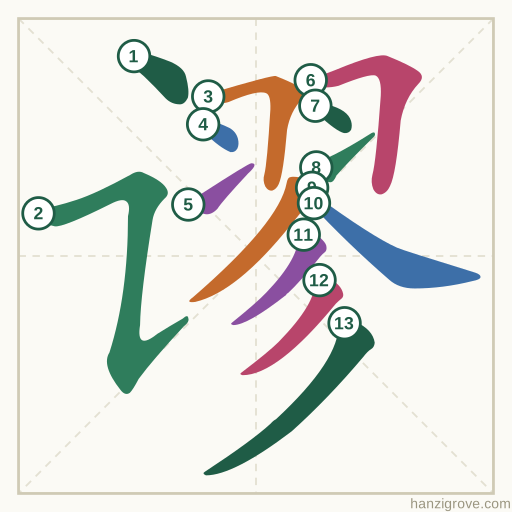
谬 stroke order
Example sentences with 荒谬
这种说法太荒谬了。Zhè zhǒng shuōfǎ tài huāngmiù le.This claim is too absurd.
他的想法听起来很荒谬。Tā de xiǎngfǎ tīngqǐlái hěn huāngmiù.His idea sounds ridiculous.
Words with 谬
Also built with 讠
- 计jìto calculate
- 订dìngto book
- 认rènto know
- 讥jīto ridicule
- 讨tǎoto haggle
- 让ràngto let
- 训xùnto teach
- 议yìto consult
- 讯xùnnews
- 记jìto remember
- 讲jiǎngto speak
- 讳huìtaboo
Quick facts
| Pinyin | miù |
|---|---|
| Meaning | absurd |
| Strokes | 13 |
| Pattern | Left–right |
Questions about 谬
What does 谬 mean?
谬 (miù) means “absurd”.
How many strokes does 谬 have?
谬 has 13 strokes.
What parts make up 谬?
谬 is made of 讠 (speech) and 翏 (the sound of the wind).
Keep learning
Start with HSK 1 · Group 1: 10 words with quick checks and spaced repeats.