
走
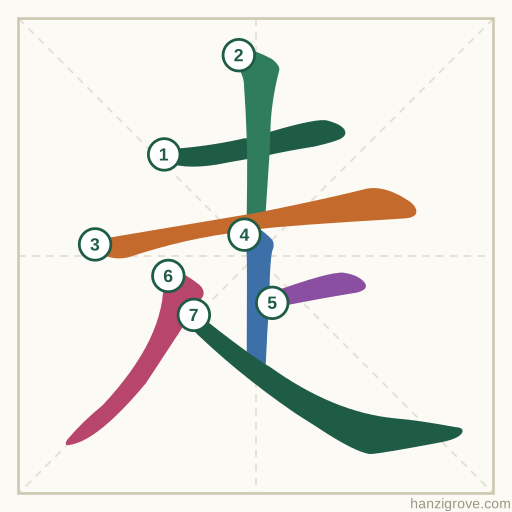
走 (zǒu) means “to walk”. It is made of 土 + 止 and has 7 strokes, and is an HSK 2 word in the current exam syllabus (2025).
Break 走 into its parts
What 走 is made of
- 土 tǔ — earth
- 十 — ten
- 一 — horizontal stroke
- 丨 — vertical stroke
- 一 — horizontal stroke
- 十 — ten
- 止 zhǐ — to stop
- 上 shàng — up
- ⺊ — structural part
- 一 — horizontal stroke
- 丨 — vertical stroke
- 上 shàng — up
Origin hint: Someone 土 stepping with their foot 止 (from the Make Me a Hanzi dataset; treat as a memory aid where history is uncertain)
走 stroke order
Example sentences
我们走吧。Wǒmen zǒu ba.Let's go.
你明天几点走?Nǐ míngtiān jǐ diǎn zǒu?What time are you leaving tomorrow?
Words with 走
- 走路zǒulùto walk
- 走过zǒuguòto walk past
- 走进zǒujìnto walk into
- 走开zǒukāito go away
- 飞禽走兽fēiqínzǒushòubirds and beasts
- 走廊zǒulángcorridor
- 走漏zǒulòuto leak (news, secrets)
- 走私zǒusīto smuggle
Also built with 土
- 去qùto go
- 吐tǔto spit
- 圣shèngholy
- 在zàiat
- 地deadverb particle (-ly)
- 场chǎngplace
- 圾jīgarbage
- 址zhǐlocation
- 均jūnequal
- 坏huàibad
- 坐zuòto sit
- 坑kēngpit
Quick facts
| Pinyin | zǒu |
|---|---|
| Meaning | to walk; leave |
| Strokes | 7 |
| Radical | 走 (run, #156) |
| Pattern | Top–bottom |
| HSK | HSK 2 (exam 2025) · HSK 1 (2021) · Old HSK 2 |
Questions about 走
What does 走 mean?
走 (zǒu) means “to walk; leave”.
How many strokes does 走 have?
走 has 7 strokes.
What is the radical of 走?
The radical of 走 is 走 (zǒu, “run”), Kangxi radical number 156.
What parts make up 走?
走 is made of 土 (earth) and 止 (to stop).
Which HSK level is 走?
走 is in HSK 2 (exam 2025) and HSK 1 (2021) and Old HSK 2.
Learn 走 with its group
It is part of HSK 1 (2021) · Group 5: a short group with quick checks and spaced repeats.