
起
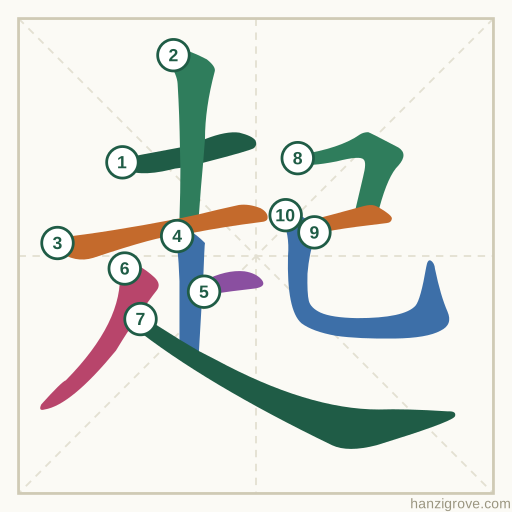
起 (qǐ) means “to get up”. It is made of 走 + 己 and has 10 strokes, and is an HSK 3 word in the current exam syllabus (2025).
Break 起 into its parts
What 起 is made of
- 走 zǒu — to walk
- 土 tǔ — earth
- 十 — ten
- 一 — horizontal stroke
- 止 zhǐ — to stop
- 上 shàng — up
- 丨 — vertical stroke
- 土 tǔ — earth
- 己 jǐ — self
- 乚 — hook stroke
Origin hint: 走 gives the meaning, 己 gives the sound. (from the Make Me a Hanzi dataset; treat as a memory aid where history is uncertain)
起 stroke order
Example sentences
他今天起得很早。Tā jīntiān qǐ de hěn zǎo.He got up very early today.
你早上几点起?Nǐ zǎoshang jǐ diǎn qǐ?What time do you get up in the morning?
Words with 起
- 对不起duìbuqǐsorry
- 起床qǐchuángto get out of bed
- 起来qǐlaito get up
- 一起yīqǐtogether
- 起飞qǐfēito take off (of a plane)
- 想起xiǎngqǐto remember
- 看起来kàn qǐlaito look like
- 看不起kànbuqǐto look down on
- 了不起liǎobuqǐamazing
- 引起yǐnqǐto cause
- 起草qǐcǎoto draft
- 起初qǐchūat first
- 起伏qǐfúto rise and fall
- 起哄qǐhòngto heckle
- 起码qǐmǎat least
- 起源qǐyuánorigin
- 掀起xiānqǐto lift
- 起到qǐdàoto have, an effect
Also built with 走
- 徒túdisciple
- 赴fùto attend
- 赶gǎnto hurry
- 趁chènwhile
- 超chāoto jump over
- 越yuèto cross
- 趋qūto hurry
- 趟tàngmeasure word for trips
- 趣qùinterest
- 陡dǒusteep
Quick facts
| Pinyin | qǐ |
|---|---|
| Meaning | to get up; to rise |
| Strokes | 10 |
| Radical | 走 (run, #156) |
| Pattern | Bottom-left wrap |
| HSK | HSK 3 (exam 2025) · HSK 1 (2021) |
Questions about 起
What does 起 mean?
起 (qǐ) means “to get up; to rise”.
How many strokes does 起 have?
起 has 10 strokes.
What is the radical of 起?
The radical of 起 is 走 (zǒu, “run”), Kangxi radical number 156.
What parts make up 起?
起 is made of 走 (to walk) and 己 (self).
Which HSK level is 起?
起 is in HSK 3 (exam 2025) and HSK 1 (2021).
Learn 起 with its group
It is part of HSK 1 (2021) · Group 40: a short group with quick checks and spaced repeats.