
退
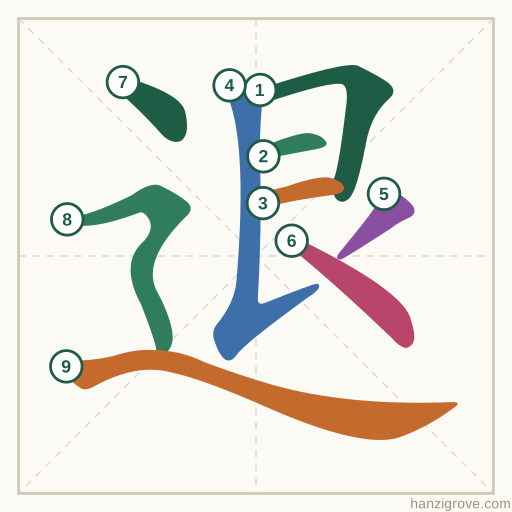
退 (tuì) means “to return (goods)”. It is made of 辶 + 艮 and has 9 strokes, and is an HSK 3 word in the 2021 standard.
Break 退 into its parts
What 退 is made of
- 辶 — walking, moving
- 艮 gěn — blunt
Origin hint: 辶 gives the meaning, 艮 gives the sound. (from the Make Me a Hanzi dataset; treat as a memory aid where history is uncertain)
退 stroke order
Example sentences
这件衣服太小了,我想退了。Zhè jiàn yīfu tài xiǎo le, wǒ xiǎng tuì le.This shirt is too small, so I want to return it.
请往后退一步。Qǐng wǎng hòu tuì yī bù.Please step back.
Words with 退
Also built with 辶
- 巡xúnto cruise
- 边biānside
- 辽liáodistant
- 达dáto reach
- 迁qiānto shift
- 迄qìto extend
- 迅xùnquick
- 过guòto pass
- 迈màito step
- 迎yíngto welcome
- 运yùnto run
- 近jìnnear
Quick facts
| Pinyin | tuì |
|---|---|
| Meaning | to return (goods); to move back; to retreat |
| Strokes | 9 |
| Radical | 辵 (walk, #162) |
| Pattern | Bottom-left wrap |
| HSK | HSK 3 (2021) · Old HSK 5 |
Questions about 退
What does 退 mean?
退 (tuì) means “to return (goods); to move back; to retreat”.
How many strokes does 退 have?
退 has 9 strokes.
What is the radical of 退?
The radical of 退 is 辵 (chuò, “walk”), Kangxi radical number 162.
What parts make up 退?
退 is made of 辶 (walking, moving) and 艮 (blunt).
Which HSK level is 退?
退 is in HSK 3 (2021) and Old HSK 5.
Learn 退 with its group
It is part of HSK 3 (2021) · Group 52: a short group with quick checks and spaced repeats.