
逢
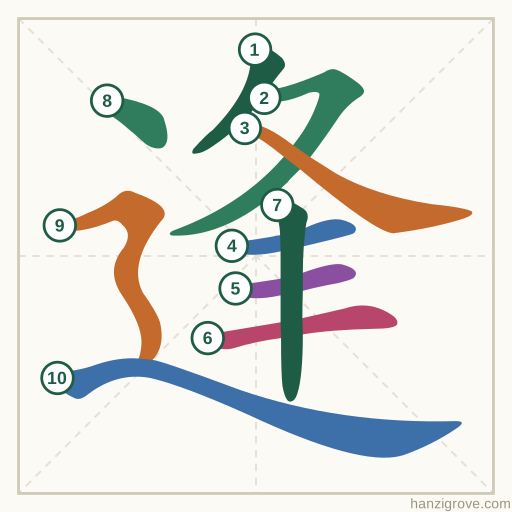
逢 (féng) means “to come upon”. It is made of 辶 + 夆 and has 10 strokes, and is an old HSK 6 word (HSK 2.0).
Break 逢 into its parts
What 逢 is made of
- 辶 — walking, moving
- 夆 féng — to resist
- 夂 zhǐ — to go
- 丿 — falling stroke
- 又 yòu — and
- 丰 fēng — abundant
- 三 sān — three
- 丨 — vertical stroke
- 夂 zhǐ — to go
逢 stroke order
Example sentences
每逢节日,商店里都很热闹。Měi féng jiérì, shāngdiàn lǐ dōu hěn rènao.Every holiday the shops are very busy.
我们这次出门正逢下雨。Wǒmen zhècì chūmén zhèng féng xiàyǔ.It happened to rain just as we went out this time.
Also built with 辶
- 巡xúnto cruise
- 边biānside
- 辽liáodistant
- 达dáto reach
- 迁qiānto shift
- 迄qìto extend
- 迅xùnquick
- 过guòto pass
- 迈màito step
- 迎yíngto welcome
- 运yùnto run
- 近jìnnear
Quick facts
| Pinyin | féng |
|---|---|
| Meaning | to come upon; to happen to meet; every time |
| Strokes | 10 |
| Pattern | Bottom-left wrap |
| HSK | Old HSK 6 |
Questions about 逢
What does 逢 mean?
逢 (féng) means “to come upon; to happen to meet; every time”.
How many strokes does 逢 have?
逢 has 10 strokes.
What parts make up 逢?
逢 is made of 辶 (walking, moving) and 夆 (to resist).
Which HSK level is 逢?
逢 is in Old HSK 6.
Learn 逢 with its group
It is part of Old HSK 6 · Group 58: a short group with quick checks and spaced repeats.