
逮
逮 (dǎi) · to catch
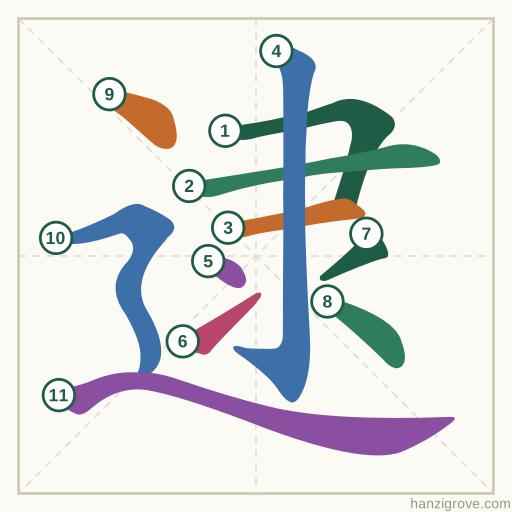
11 strokesBottom-left wrap
逮 (dǎi) means “to catch”. It is made of 辶 + 隶 and has 11 strokes.
Break 逮 into its parts
What 逮 is made of
- 辶 — walking, moving
- 隶 lì — subservient
- 彐 jì — snout
- 二 — two strokes
- 氺 shui — structural part
- 亅 — hook
- 彐 jì — snout
逮 stroke order
Example sentences with 逮捕
警察逮捕了那个小偷。Jǐngchá dàibǔ le nàge xiǎotōu.The police arrested the thief.
他因为偷东西被逮捕了。Tā yīnwèi tōu dōngxi bèi dàibǔ le.He was arrested for stealing.
Words with 逮
Also built with 辶
- 巡xúnto cruise
- 边biānside
- 辽liáodistant
- 达dáto reach
- 迁qiānto shift
- 迄qìto extend
- 迅xùnquick
- 过guòto pass
- 迈màito step
- 迎yíngto welcome
- 运yùnto run
- 近jìnnear
Quick facts
| Pinyin | dǎi |
|---|---|
| Meaning | to catch |
| Strokes | 11 |
| Pattern | Bottom-left wrap |
Questions about 逮
What does 逮 mean?
逮 (dǎi) means “to catch”.
How many strokes does 逮 have?
逮 has 11 strokes.
What parts make up 逮?
逮 is made of 辶 (walking, moving) and 隶 (subservient).
Keep learning
Start with HSK 1 · Group 1: 10 words with quick checks and spaced repeats.